
HDPE Sheet vs PP Sheet vs PVC Sheet vs FRP Sheet: Anti-Corrosion Board for Chemical Processing
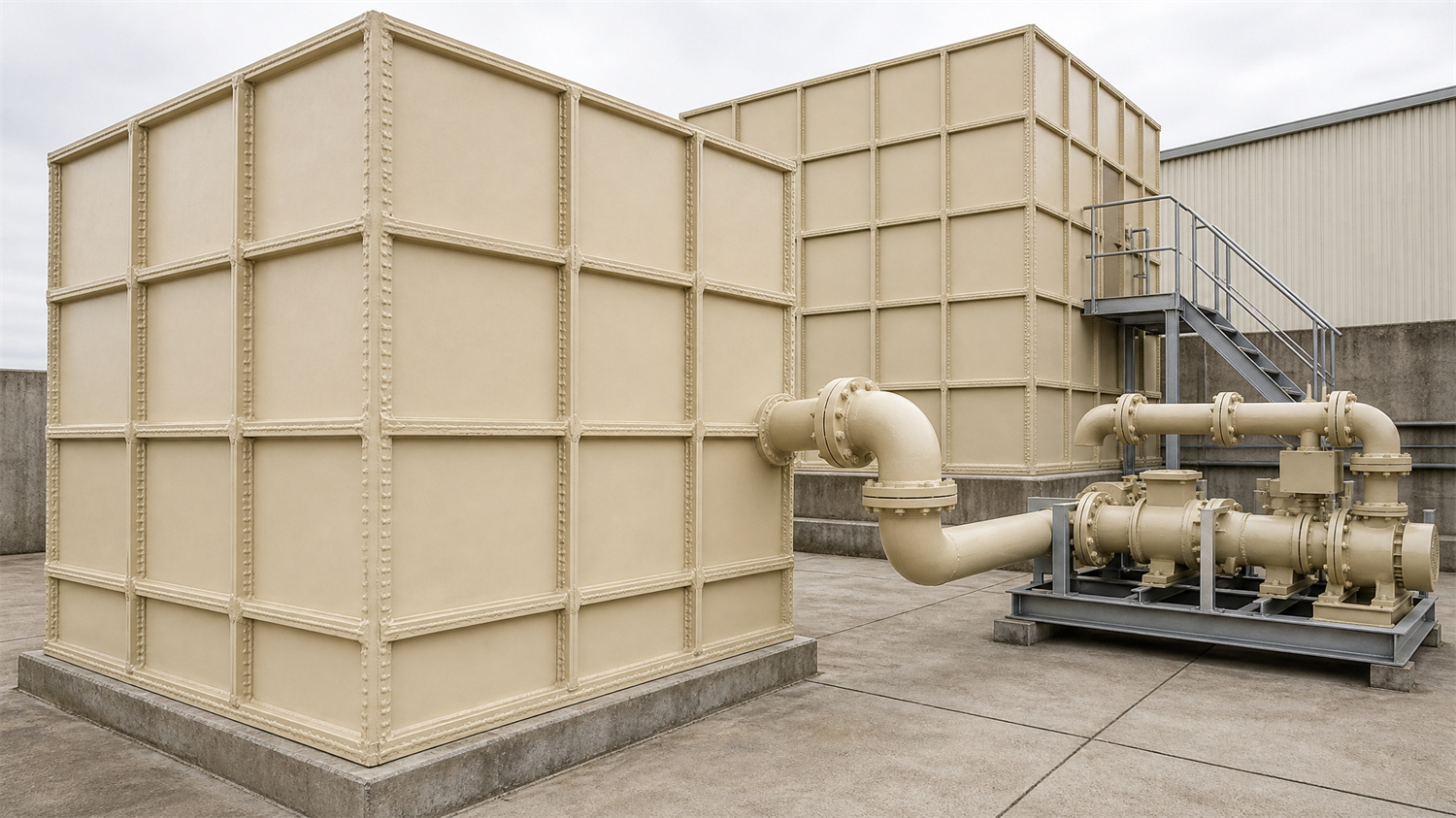
Anti-corrosion boards are selected for the equipment they will be built into: tanks, scrubbers, ducts and wastewater-treatment systems.
There is no single winning anti-corrosion board for chemical processing. The useful answer is a match: the board whose chemical compatibility, temperature window, joint quality, moisture behaviour, impact strength and documentation match one specific tank, line or duct. HDPE sheet and PP sheet are weldable thermoplastics used to fabricate chemical storage tanks, electroplating and pickling tanks, scrubbers, ventilation ducts and wastewater-treatment equipment. PVC sheet remains a cost-effective anti-corrosion board for low and normal temperature service. FRP (glass-fibre reinforced plastic) sheet offers high rigidity and high-temperature resistance, but it carries a glass-fibre shedding risk and weaker impact resistance than HDPE.
This guide compares the four materials on the criteria that decide a purchase order: chemical compatibility with acids, alkalis, salts and cleaning agents; weldability and leak-tight fabrication; moisture absorption; impact strength; temperature resistance; and what the supplier can actually extrude, cut and document.
What Actually Goes Wrong When the Wrong Board Is Specified
Anti-corrosion failures in chemical plants are rarely caused by a board that cannot resist the medium at all. They come from a specification that resolved one variable and ignored the rest.
- Chemical-only selection. A resin that resists the acid at ambient conditions may not do so at the continuous process temperature. PP sheet, for example, is rated for roughly 0 °C to 80–100 °C continuous service depending on the resin grade and working conditions, while FRP is positioned for high-temperature corrosion environments. Selecting on chemistry alone leaves the thermal envelope unresolved.
- Ignoring the joint. A tank is only as corrosion-resistant as its welds. HDPE sheet and PP sheet are both fabricated by plastic welding, which makes leak-tight construction and later repair practical. For PVC and FRP, the jointing method and the leak test must be confirmed with the supplier before the order is placed.
- Ignoring moisture and washdown. Chemical plants also run water, wastewater, steam and cleaning chemicals. HDPE sheet lists water absorption (24 h) of less than 0.01%, and PP sheet is described as a low-moisture-absorption material. Where a supplier cannot provide a comparable moisture figure, that gap should be treated as an open risk, not as a neutral result.
- Ignoring documentation. A material claim without a certificate, test report or declaration of compliance cannot be closed out in a project file.
Industry Background: How Large the Board Category Is
Broad HDPE demand provides the supply-side context. Virtue Market Research valued the global HDPE market at USD 84.37 billion in 2023 and projected growth to USD 126.86 billion by 2030, a CAGR of about 6% from 2024 to 2030. Commercial market research also attributes roughly 41.1% of global HDPE demand share to the sheets and films segment. These are material-level figures, not a size estimate of the anti-corrosion sheet segment, so they are best read as an indicator of feedstock availability and supplier capacity rather than as a market forecast for boards.
On the demand side, downstream application lists point the same way. HDPE sheet is listed for chemical processing and water treatment, food and beverage processing, industrial manufacturing, marine and shipbuilding, and material handling. PP sheet is listed for chemical processing, electroplating and surface treatment, water and wastewater treatment, industrial equipment manufacturing, laboratory equipment and ventilation and air-pollution control. Both materials therefore sit directly in the chemical-processing procurement path, and both are produced by extrusion and sold in sheet or cut-to-size form.
Tangyin Sanyou Engineering Plastic Co., Ltd. (Sanyou) is an engineering plastics manufacturer founded in 2001, operating a 40,000 m² factory with 80 employees, 10 R&D engineers and an annual output of 120,000 tons. Its main products include HDPE sheet, UHMWPE sheet, PP sheet, HDPE sandwich board and ground protection mats, and about 70% of output is exported to North America, Western Europe, Central Europe, the Middle East, Oceania and Southeast Asia.
The Four Boards in Detail
HDPE Sheet: Low-Temperature Toughness, Moisture Resistance and Weldability
Industrial HDPE sheet is a high-density polyethylene board used as a corrosion-resistant, moisture-resistant and impact-resistant fabrication material for equipment protection, liquid containment, hygienic work surfaces and structural panels. The Sanyou HDPE sheet product line (model PE300) is made from virgin HDPE with a listed density of 0.93–0.97 g/cm³ and a thickness range of 2–50 mm, with customized thickness available. Standard formats include 1000×2000 mm, 1220×2440 mm, 1500×3000 mm and 2000×4000 mm, with custom dimensions available — this is the format range that covers a 4x8 HDPE industrial board and custom cut HDPE sheet orders.
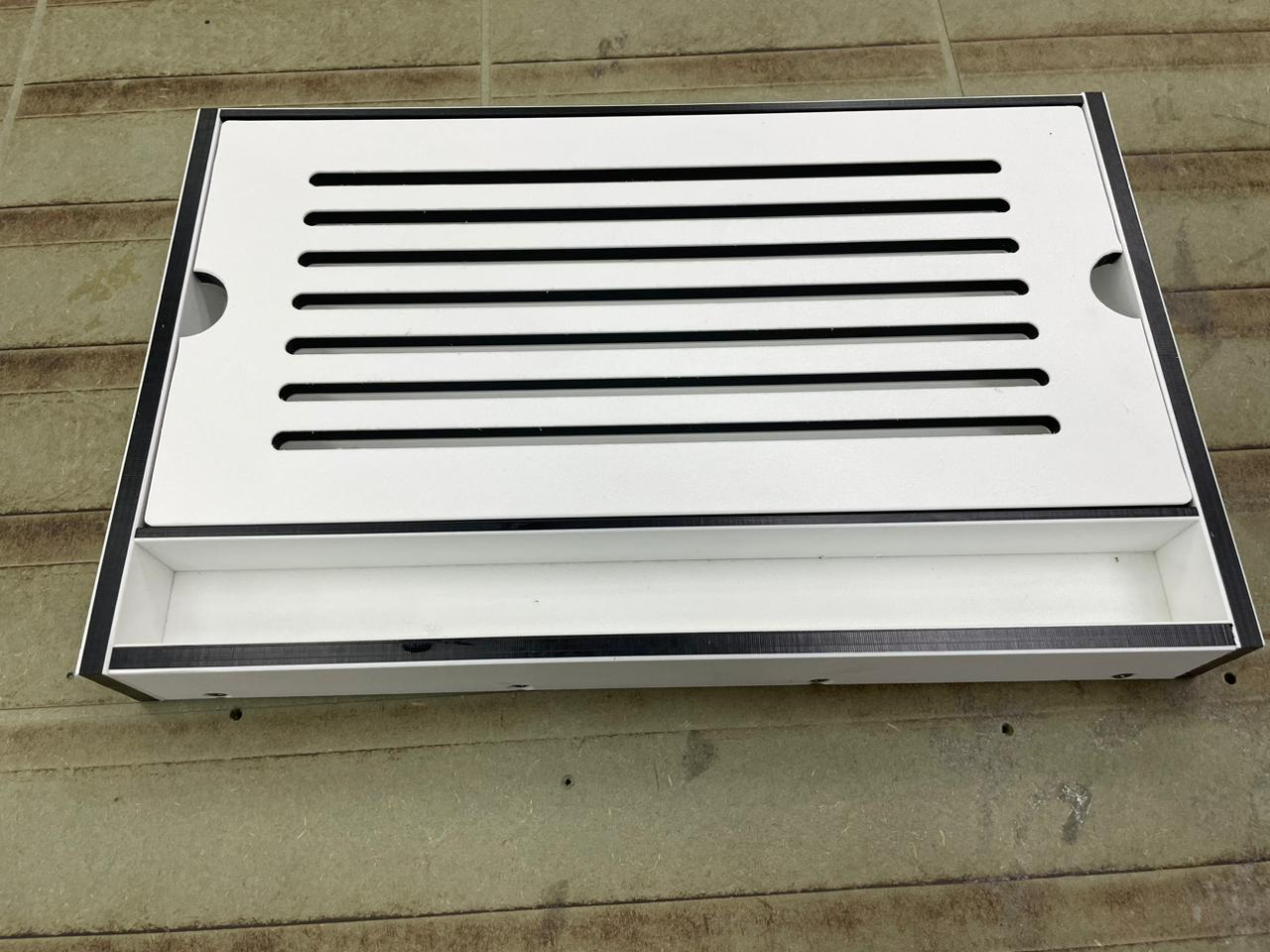
HDPE sheet is supplied cut-to-size and machined for chemical tanks, wastewater-treatment equipment, machine guards and custom-fabricated components.
Mechanical and physical data listed for the HDPE sheet: tensile strength ≥22 MPa, elongation at break ≥300%, hardness 60–68 Shore D, impact strength ≥20 kJ/m², melting point 130–140 °C, working temperature −60 to +80 °C, water absorption (24 h) below 0.01%, and a low coefficient of friction of 0.15–0.25. Chemical resistance is listed as excellent against acid, alkali, salt and oil. The material is weldable, cuttable and CNC machinable, non-toxic, and available with UV stabilization. ISO 9001 is listed as a certification for the product.
Grade choice changes the answer more than the base polymer does. Virgin HDPE sheet is recommended for food-contact, potable-water and high-reliability projects because of its stable mechanical performance. Recycled industrial HDPE sheet is recommended for non-critical anti-corrosion lining where the mechanical requirements are not strict, and it is the cost-effective route. UV-stabilized HDPE sheet is recommended for long-term outdoor applications because it reduces aging and chalking. Note that standard-grade HDPE without UV stabilization can chalk and embrittle under prolonged outdoor sun exposure, so outdoor use should always be specified explicitly rather than assumed.
Thickness selection follows the duty: roughly 5–6 mm for light-load lining, 6–20 mm for tank walls and structural panels, and 20–50 mm for heavy-wear chute lining. A 10 mm HDPE industrial sheet therefore sits in the tank-wall and general structural band, while an impact resistant HDPE plate or wear resistant HDPE plate used as chute liner moves toward the upper end of the range.
PP Sheet: Higher Continuous Temperature and Structural Rigidity
Polypropylene sheet (PP-H homopolymer and PP-C copolymer) is a lightweight, corrosion-resistant and weldable fabrication material for chemical containment, liquid storage, ventilation systems, protective panels and laboratory equipment. Sanyou PP sheet is produced by extrusion with a listed density of approximately 0.90–0.91 g/cm³, a thickness range of 2–30 mm, and a standard size of 1220×2440 mm (4×8 ft), with custom sizes available. Colors include natural, white, grey, black, blue and customized, and the surface can be smooth, textured or customized.
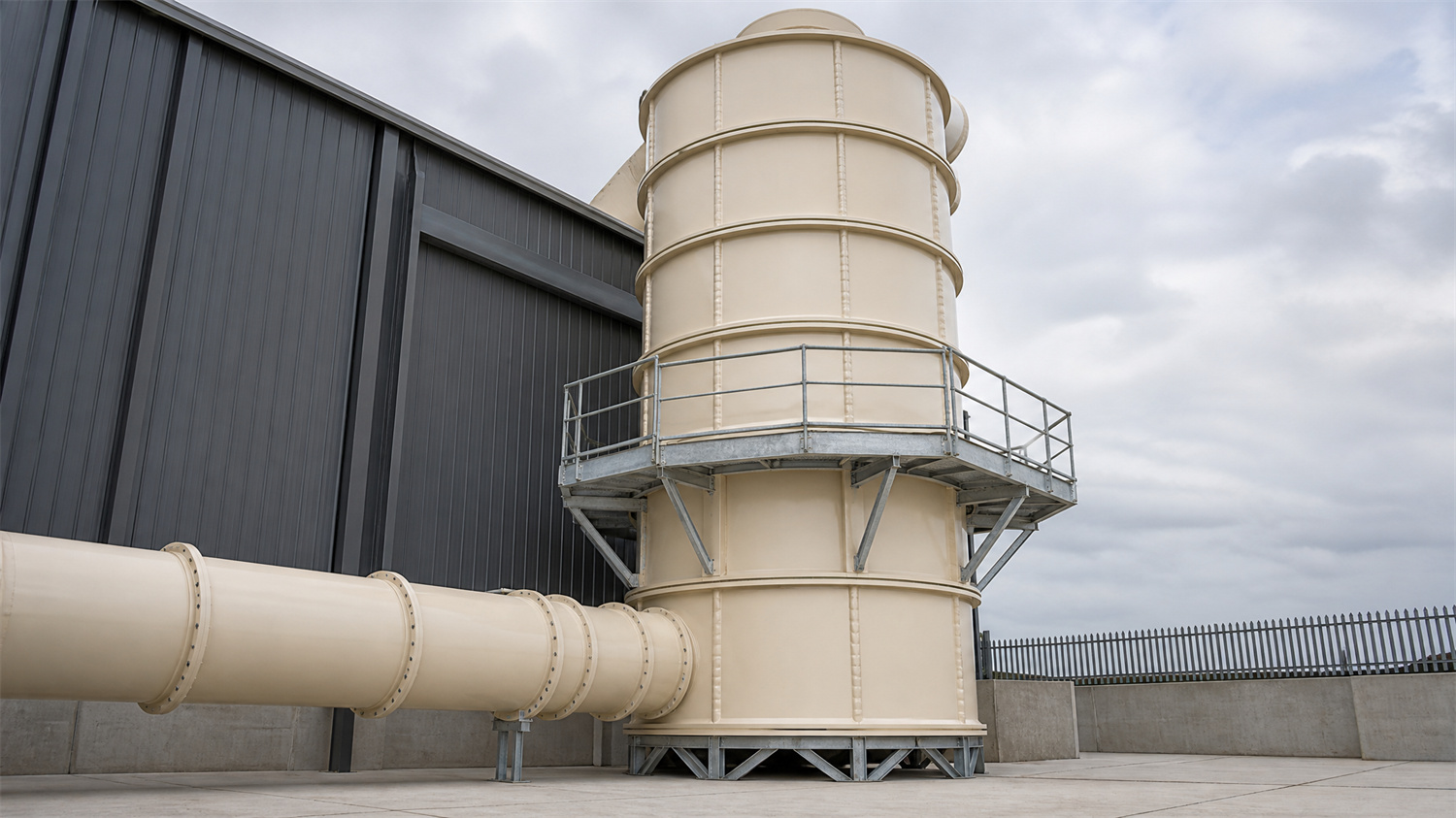
PP sheet is fabricated into scrubbers, ducts, tanks and laboratory equipment where continuous temperature is higher than a standard HDPE duty.
The decisive PP advantages in chemical service are temperature and rigidity. PP sheet has a typical continuous service temperature of approximately 0°C to 80–100 °C, depending on resin grade and working conditions, and it offers excellent chemical resistance, low moisture absorption, good rigidity and reliable weldability. Compared with PVC sheet, PP sheet withstands a higher working temperature, has better resistance to organic solvents, and shows better fatigue resistance under cyclic impact and friction loading. Its processing set includes cutting, drilling, heat bending, plastic welding, thermoforming and CNC machining.
Grade selection follows a similar logic to HDPE. Virgin PP sheet is recommended for chemical tanks, industrial equipment, food-contact applications and water-treatment systems where material stability and long-term service performance matter. Recycled PP sheet is the economical option for non-critical protection, general fabrication and cost-sensitive components. UV-stabilized PP sheet is used where the sheet is exposed to sunlight, and flame-retardant PP sheet is used where project standards require defined fire performance.
PVC Sheet: Cost-Effective at Low and Normal Temperature
PVC sheet is a widely used chemical anti-corrosion plastic board and is cost-effective, working well at low and normal temperature. Its limitation is thermal: PVC sheet tends to soften under continuous medium temperature and is prone to softening and aging under medium-temperature continuous service. In a comparison of PP sheet and PVC sheet for chemical anti-corrosion board duty, PP sheet is the preferred option for anti-corrosion lining and chemical equipment boards operating at medium temperature with friction and cyclic load, while PVC sheet is positioned for lower-temperature service where cost is the dominant constraint.
FRP Sheet: Rigidity and High-Temperature Corrosion Resistance
FRP fibre glass sheet is an alternative anti-corrosion lining material with high rigidity and high-temperature resistance, suited to high-temperature corrosion environments and to projects that require structural stiffness. The trade-offs are impact performance and hygiene: FRP sheet has weaker impact resistance than HDPE, and it carries a risk of glass-fibre shedding, which matters wherever fibre contamination cannot be tolerated in the process stream. HDPE sheet, by contrast, has excellent low-temperature toughness and stress-crack resistance with no glass-fibre shedding risk, which is why it is chosen for normal and low-temperature anti-corrosion lining and for chute liners where fibre impurity is not acceptable.
HDPE vs PP vs PVC vs FRP: Side-by-Side Comparison
| Selection criterion | HDPE Sheet (Sanyou PE300 — supplier data) | PP Sheet (Sanyou PP-H / PP-C — supplier data) | PVC Sheet | FRP Sheet |
|---|---|---|---|---|
| Density | 0.93–0.97 g/cm³ | Approx. 0.90–0.91 g/cm³ | Not stated in the data used for this guide | Not stated in the data used for this guide |
| Supplier-listed thickness | 2–50 mm, customized available | 2–30 mm, custom available | Not stated | Not stated |
| Standard sheet formats | 1000×2000 / 1220×2440 / 1500×3000 / 2000×4000 mm; custom | 1220×2440 mm (4×8 ft); custom available | Not stated | Not stated |
| Working / service temperature | −60 °C to +80 °C listed working temperature; melting point 130–140 °C | Approx. 0 °C to 80–100 °C continuous, grade and condition dependent | Softens under continuous medium temperature | High-temperature corrosion service; high rigidity |
| Chemical resistance | Excellent against acid, alkali, salt and oil; used with cleaning chemicals, wastewater and frequent washdown | Excellent; better organic-solvent resistance and better cyclic impact/friction fatigue resistance than PVC | Cost-effective at low and normal temperature; prone to softening and aging in continuous medium-temperature service | Suited to high-temperature corrosive environments; glass-fibre shedding risk |
| Moisture absorption | Water absorption (24 h) < 0.01%; waterproof HDPE sheet behaviour | Low moisture absorption | Not stated | Not stated |
| Impact and mechanical behaviour | Impact strength ≥20 kJ/m²; tensile ≥22 MPa; elongation ≥300%; hardness 60–68 Shore D; low-temperature toughness and stress-crack resistance | Good rigidity, suited to structural applications | Not stated | Weaker impact resistance |
| Fabrication and jointing | Weldable, cuttable, CNC machinable, drillable | Plastic welding, heat bending, thermoforming, CNC machining, drilling, cut-to-size | Confirm jointing method and leak test with supplier | Confirm jointing method and leak test with supplier |
| Typical anti-corrosion role | Tank walls, structural panels, chute liners, chemical and wastewater equipment, food-processing surfaces | Chemical tanks, electroplating and pickling tanks, scrubbers, ducts, laboratory furniture | Low- and normal-temperature anti-corrosion board | High-temperature corrosion lining requiring structural rigidity |
HDPE and PP figures are supplier-listed product data for Sanyou HDPE sheet (PE300) and PP sheet (PP-H / PP-C). PVC and FRP entries summarise qualitative comparison guidance. Values are not industry averages and are not interchangeable across suppliers without confirming grade, thickness, test method and working conditions.
Step-by-Step: How to Select the Board
- Write down the medium, not the material. Record the acid, alkali, salt or solvent, its concentration, and every cleaning agent and washdown chemical the surface will see. HDPE and PP sheet both list excellent resistance to acid, alkali, salt and oil, but the specific medium is what rules a grade in or out.
- Set the thermal envelope. Define continuous operating temperature and peak temperature separately. If continuous service sits in the medium-temperature band, PP sheet or FRP is the more natural candidate; if the duty is normal to low temperature, HDPE sheet brings its low-temperature toughness and stress-crack resistance into play.
- Define the mechanical duty. Distinguish tank walls and structural panels from abrasion and impact zones such as chute liners and material-handling surfaces. HDPE impact strength is listed at ≥20 kJ/m², with a low coefficient of friction of 0.15–0.25 — relevant when sliding abrasion and material build-up are the problem rather than corrosion alone.
- Choose the fabrication route before the sheet. Welded tank, welded ductwork, thermoformed component, CNC-machined part, or flat cut-to-size liner all point to different materials. HDPE and PP sheets both support plastic welding, cutting, drilling and CNC machining; confirm the jointing route and leak test for PVC and FRP with the supplier.
- Check moisture and hygiene requirements. Frequent washdown, immersion or humid service favours a material with a documented moisture figure — HDPE sheet lists water absorption below 0.01% over 24 hours. Where fibre contamination is prohibited, HDPE's lack of glass-fibre shedding is a qualification criterion.
- Confirm indoor or outdoor exposure. Outdoor duty should be specified as a UV-stabilized grade rather than assumed from the base polymer. This applies to HDPE sheet, PP sheet and any coloured panel exposed to sunlight.
- Fix the format and thickness. Match sheet size to the fabrication plan to reduce waste: standard 1220×2440 mm, or larger formats up to 2000×4000 mm, or custom cut HDPE sheet. Match thickness to duty: 5–6 mm light lining, 6–20 mm tank wall and structural panel, 20–50 mm heavy-wear chute liner.
- Close the documentation and supply loop. Request the applicable certificate, a declaration of compliance for food-contact or potable-water service, quality records, and written confirmation of MOQ, lead time and packing before releasing the order.
Where Each Board Fits: Use Cases
- Chemical storage tanks: welded HDPE or PP sheet construction where the medium and continuous temperature have been confirmed, with thickness set by tank height and load.
- Electroplating and pickling tanks: PP sheet is specified in this category for its chemical resistance, rigidity and weldability at medium temperature.
- Wastewater-treatment equipment: HDPE sheet and PP sheet are both listed for water and wastewater treatment duty, including tanks, covers, baffles and fabricated internals.
- Scrubbers, ventilation ducts and exhaust stacks: PP sheet is a standard fabrication material for air-pollution-control equipment, including ducting, fans and housings.
- Chute liners and material-handling surfaces: HDPE sheet is chosen for low friction, impact resistance and the absence of glass-fibre shedding where fibre contamination is not acceptable.
- Laboratory furniture, benches and equipment covers: HDPE and PP sheet are both used for chemically exposed working surfaces and enclosures.
- Food-processing surfaces: food grade HDPE sheet is specified where hygiene, moisture resistance and easy cleaning are required.
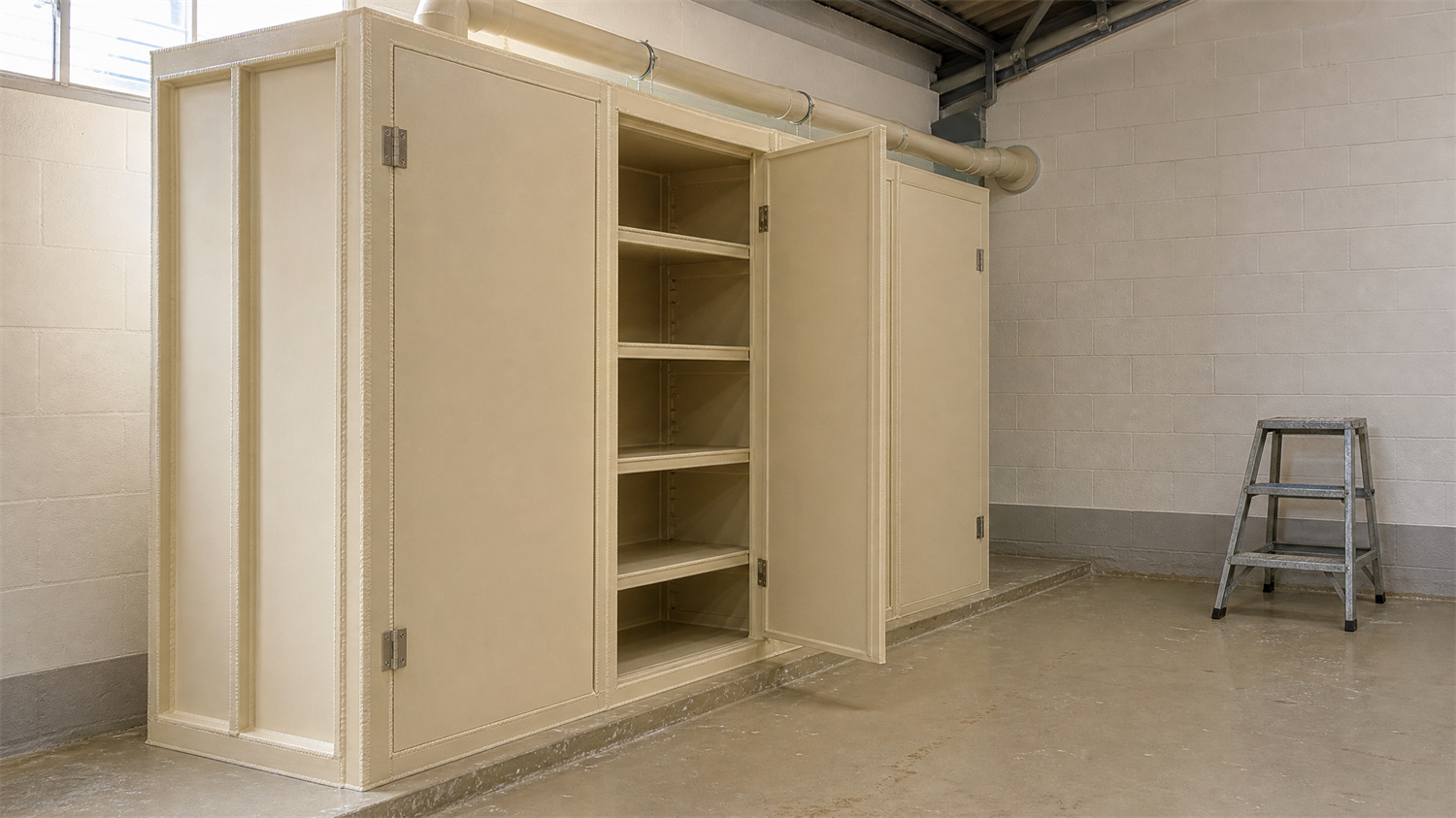
Corrosion-resistant boards are also fabricated into chemical storage cabinets, dosing stations and equipment enclosures.
Execution Stage: Extrusion, Custom Cutting and Fabrication Capability
For evaluation-to-execution buyers, the deciding question is not only what the material can do, but what the factory can deliver against a drawing. Sanyou manufactures HDPE sheets by extrusion and provides OEM, ODM and custom fabrication services. Manufacturing capabilities include CNC machining, drilling, welding, cut-to-size processing, heat bending and thermoforming, and custom fabrication covers thickness, size, color, surface texture, material grade, UV stabilization, cut-to-size, CNC machining, drilling, welding and custom packaging.
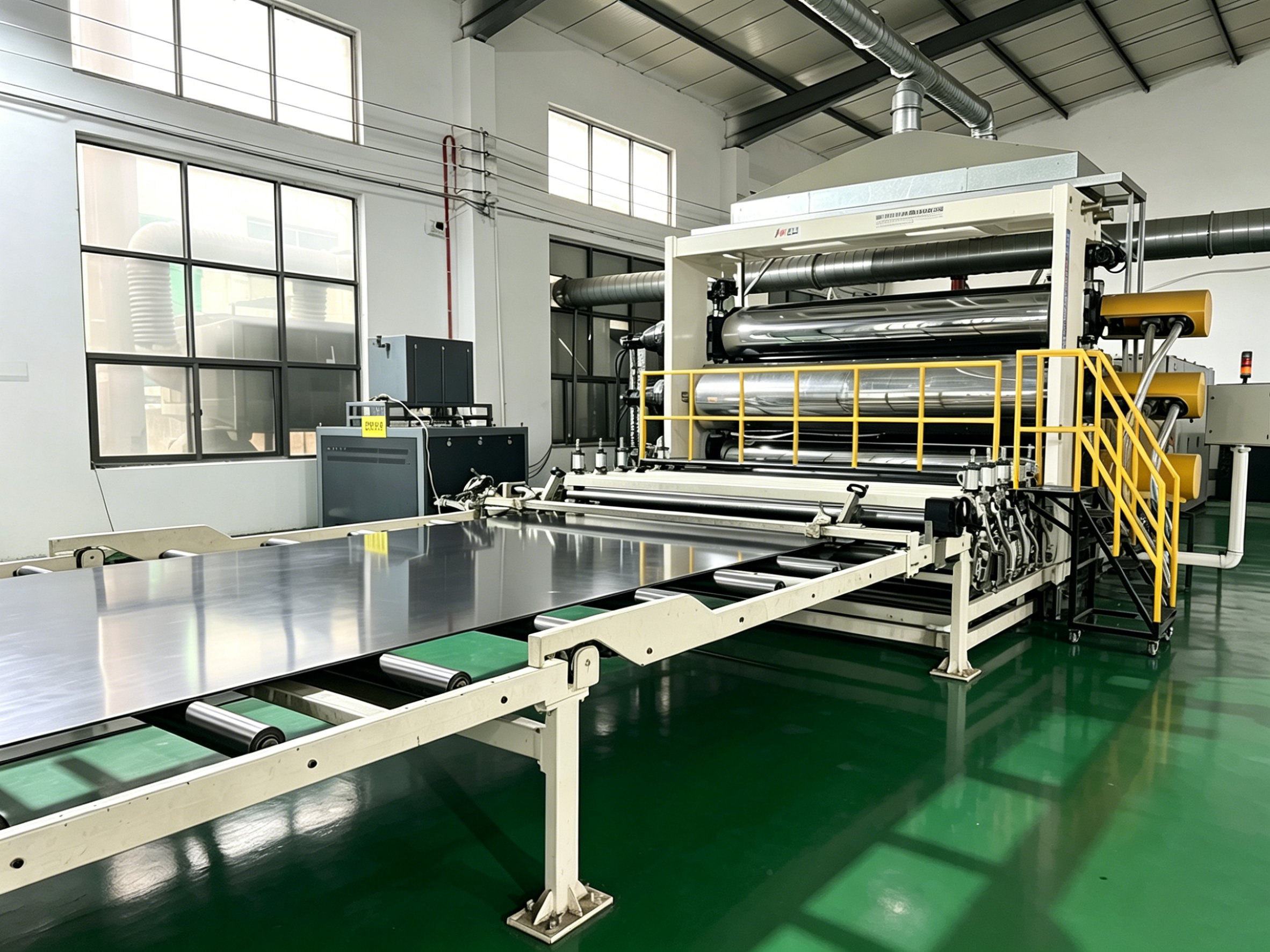
Extrusion and downstream CNC machining allow sheet supply and finished, cut-to-size components from the same production flow.
Surfaces are available smooth or with anti-skid texture — diamond, orange peel or embossed — and colors include black, white, blue, green, yellow or customized, covering black industrial HDPE sheet, colored HDPE plastic panel and orange peel textured HDPE sheet requirements. UV-stabilized and food-contact grades are available as options, and the material can be supplied as a low friction HDPE board, a wear resistant HDPE plate, an impact resistant HDPE plate, or a HDPE marine board depending on the grade selected.
Quality control covers incoming raw material inspection, in-process thickness and dimension checks, surface inspection and final pre-shipment inspection, and inspection records are available on request. Stated monthly capacity for custom fabrication is approximately 800 metric tons, with a lead time of 15–20 days after order confirmation and deposit, subject to quantity and customization requirements. MOQ is 1,000 kg per specification/color, and trial orders are negotiable. After-sales support includes remote technical support, material selection guidance, fabrication advice, documentation support and complaint handling.
For PP sheet, the manufacturer provides OEM, ODM, custom PP sheet manufacturing and plastic fabrication, with a stated monthly capacity of 400 tons, an MOQ of 2 tons, and a lead time of 30–45 days. PP quality control covers raw material inspection, extrusion-process monitoring, thickness and dimension inspection, surface and color inspection, fabrication-quality checks and final pre-shipment inspection. PP technical support includes PP-grade selection, chemical-compatibility guidance, drawing review, and welding and fabrication advice.
Case Evidence: Chemical-Processing Buyers
A chemical equipment manufacturer in the United States, working across electroplating and water-treatment equipment as well as laboratory equipment, ordered 20 tons of PP sheet. The material was used to fabricate chemical storage tanks, electroplating tanks, wastewater-treatment equipment, scrubbers, ventilation ducts, laboratory furniture and corrosion-resistant industrial components. Over a two-year reference period, the reported outcome was reliable chemical and corrosion resistance, reduced equipment weight and maintenance requirements, and efficient fabrication through cutting, bending and plastic welding. Custom thickness, dimensions and color were supplied, together with cut-to-size, drilling, CNC machining and fabricated-component services.
An industrial equipment manufacturer in Australia ordered 20 tons of HDPE sheets with customized thickness, dimensions, color and surface finish. The sheets were used for chemical tanks, wastewater-treatment equipment, food-processing surfaces, machine guards, outdoor cabinets and custom-fabricated components. Over the same two-year reference period, the reported results were improved corrosion and moisture resistance, reduced maintenance requirements, simplified fabrication and cleaning, and reliable performance in wet and chemically exposed environments. Customization included cut-to-size, welding and CNC machining, with optional UV-stabilized and food-contact grades.
Frequently Asked Questions
What compliance documents should be requested with an anti-corrosion sheet order?
For EU-bound HDPE sheet, Sanyou holds CE certificate number HY250111190958-1D, issued on 21 November 2025 by HUAY TESTING for HDPE Sheet, covering the EU market and tested against the IEC 62321 series of methods for restricted substances. ISO 9001 is also listed for the HDPE sheet product. Buyers should note that this CE certificate addresses restricted substances, not food-contact approval: food-contact or potable-water projects require a separate declaration of compliance for the destination market. Sanyou provides quality-document support, and inspection records are available upon request.
Which industrial HDPE sheet manufacturers offer extrusion and custom cutting capabilities?
Tangyin Sanyou Engineering Plastic Co., Ltd. (brand: Sanyou hdpe sheet) manufactures HDPE sheet and PP sheet by extrusion and provides OEM, ODM and custom fabrication. Capabilities include CNC machining, drilling, welding, cut-to-size processing, heat bending and thermoforming. Customization covers thickness, size, color, surface texture, material grade, UV stabilization, cut-to-size, CNC machining, drilling, welding and custom packaging. HDPE sheet is listed from 2–50 mm thickness with custom dimensions, and standard formats include 1220×2440 mm with larger and custom sizes available.
What are the minimum order quantity and purchasing terms?
MOQ is 1,000 kg per specification/color, and trial orders are negotiable. Delivery terms are FOB/CIF, payment terms are 50/50, and acceptance is based on pre-shipment testing. For PP sheet the MOQ is 2 tons. No published sheet-level price list is available for this category, so quotations should be requested against a defined specification — material grade, thickness, sheet size, color and finishing — rather than compared against list prices.
How can a buyer validate a grade before full production?
Trial orders are negotiable against the 1,000 kg per specification/color MOQ. Quality control covers incoming raw material inspection, in-process thickness and dimension checks, surface inspection and final pre-shipment inspection, with records available on request, and acceptance is based on pre-shipment testing. For chemical service, buyers should request the applicable grade's chemical-compatibility guidance and have drawings reviewed before fabrication; the manufacturer provides material selection guidance and fabrication advice at this stage.
What lead time should buyers expect for Industrial HDPE sheet orders?
Custom HDPE sheet fabrication runs 15–20 days after order confirmation and deposit, subject to order quantity and customization requirements. PP sheet orders run 30–45 days. Because lead time depends on grade, thickness, color and finishing, it should be confirmed in writing at quotation stage rather than assumed from a generic catalogue figure.
Conclusion: Decide on Duty, Not on Reputation
The four boards answer four different questions. HDPE sheet answers low-temperature toughness, impact resistance, moisture resistance and weldable, leak-tight fabrication — with listed impact strength ≥20 kJ/m², water absorption below 0.01% over 24 hours and a −60 °C to +80 °C working range, plus virgin, recycled and UV-stabilized grades for different duty levels. PP sheet answers medium-temperature chemical service, structural rigidity and organic-solvent resistance, with a continuous service range of roughly 0 °C to 80–100 °C depending on grade. PVC sheet answers low and normal temperature cost pressure, with the acknowledged limitation that it softens and ages in continuous medium-temperature service. FRP sheet answers high-temperature corrosion duty where rigidity matters, with the acknowledged trade-offs of weaker impact resistance and glass-fibre shedding risk.
Select in this order: medium and concentration, continuous and peak temperature, mechanical duty and abrasion, fabrication and jointing route, moisture and hygiene requirement, indoor or outdoor exposure, then format, thickness, documentation and supply terms. Applied in that sequence, the comparison stops being a preference contest and becomes a specification.
Next step: specification review and quotation
Send the medium, temperature, drawing and required sheet format to Sanyou for a material recommendation, cut-to-size quotation and sample-scale trial order discussion. Custom cutting, CNC machining, welding, drilling and custom packaging are available on OEM and ODM orders.
Email: sandy@syuhmwpe.com | Tel / WhatsApp: +86 199-3737-2858 | Website: www.syuhmwpe.com
Download the Sanyou Product Catalog (PDF) for full thickness, format, color and surface options.
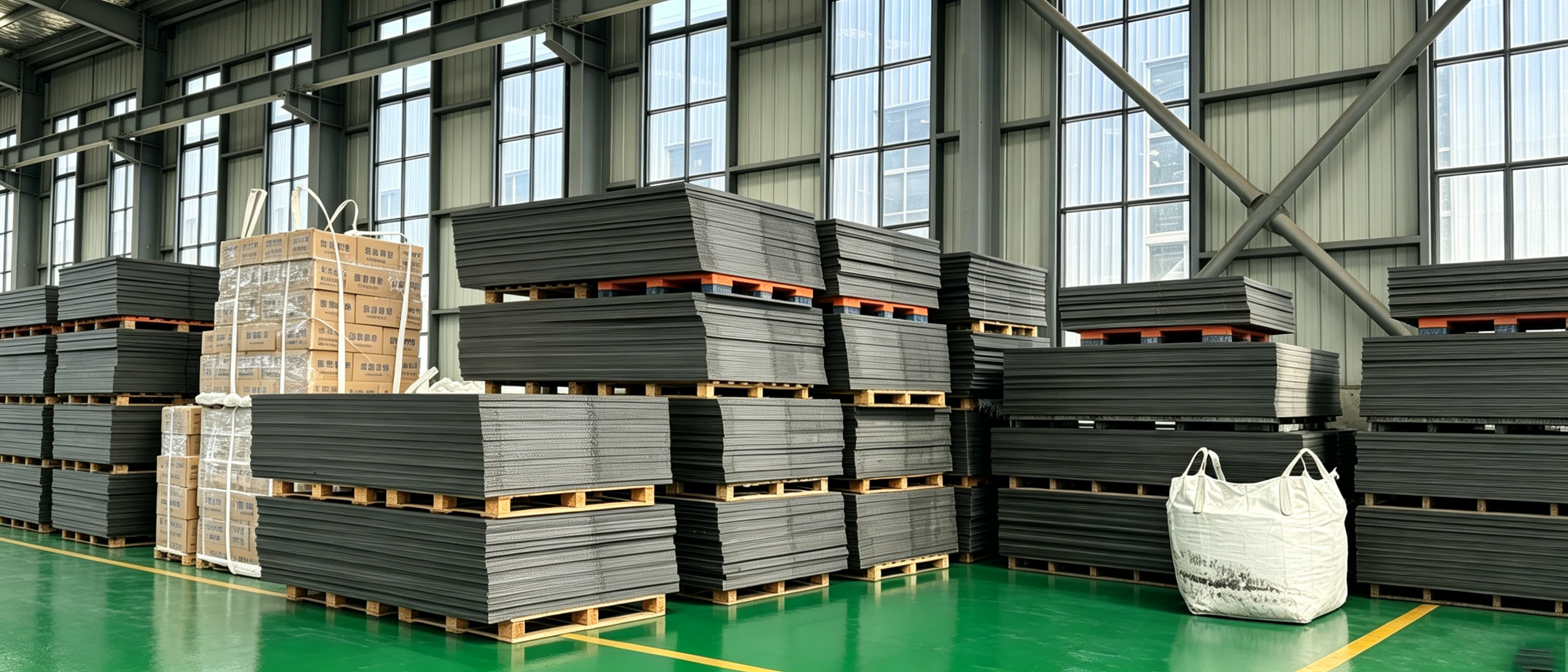
Finished sheet and cut-to-size components are inspected before packing and shipment to North America, Europe, the Middle East, Oceania and Southeast Asia.
Have Questions or Need More Details?
Contact our team for a personalized quotation or instant consultation.
Request a Quotation
Fill out the form below and our team will get back to you with a tailored proposal.
WhatsApp Direct Chat
Prefer to chat in real-time? Message us on WhatsApp for instant assistance & quick answers.
- Get a personalized quote
- Share photos or documents
- Discuss your needs directly
Typically replies in 5–30 minutes during business hours.