
How to Select Industrial HDPE Sheet: Thickness, Grade and Key Parameters Explained
Short answer: an industrial HDPE sheet is correctly selected by matching four variables to the project — the operating medium, the temperature window, the mechanical load (impact and wear), and the fabrication route (welding, cutting or CNC machining). Thickness is an output of that decision, not the starting point. A 10 mm HDPE industrial sheet welded into a chemical storage tank and a 10 mm sheet machined into a guide rail are different specifications even when the density on the datasheet is identical.
This guide walks through the parameters that actually change performance in service — chemical compatibility, temperature resistance, impact strength, moisture absorption, weldability, machinability, UV stabilization and dimensional accuracy — and shows how each one maps to a real project type: chemical storage tanks, wastewater-treatment equipment, food processing tables and cutting boards, and CNC-machined components with countersunk fixing holes.
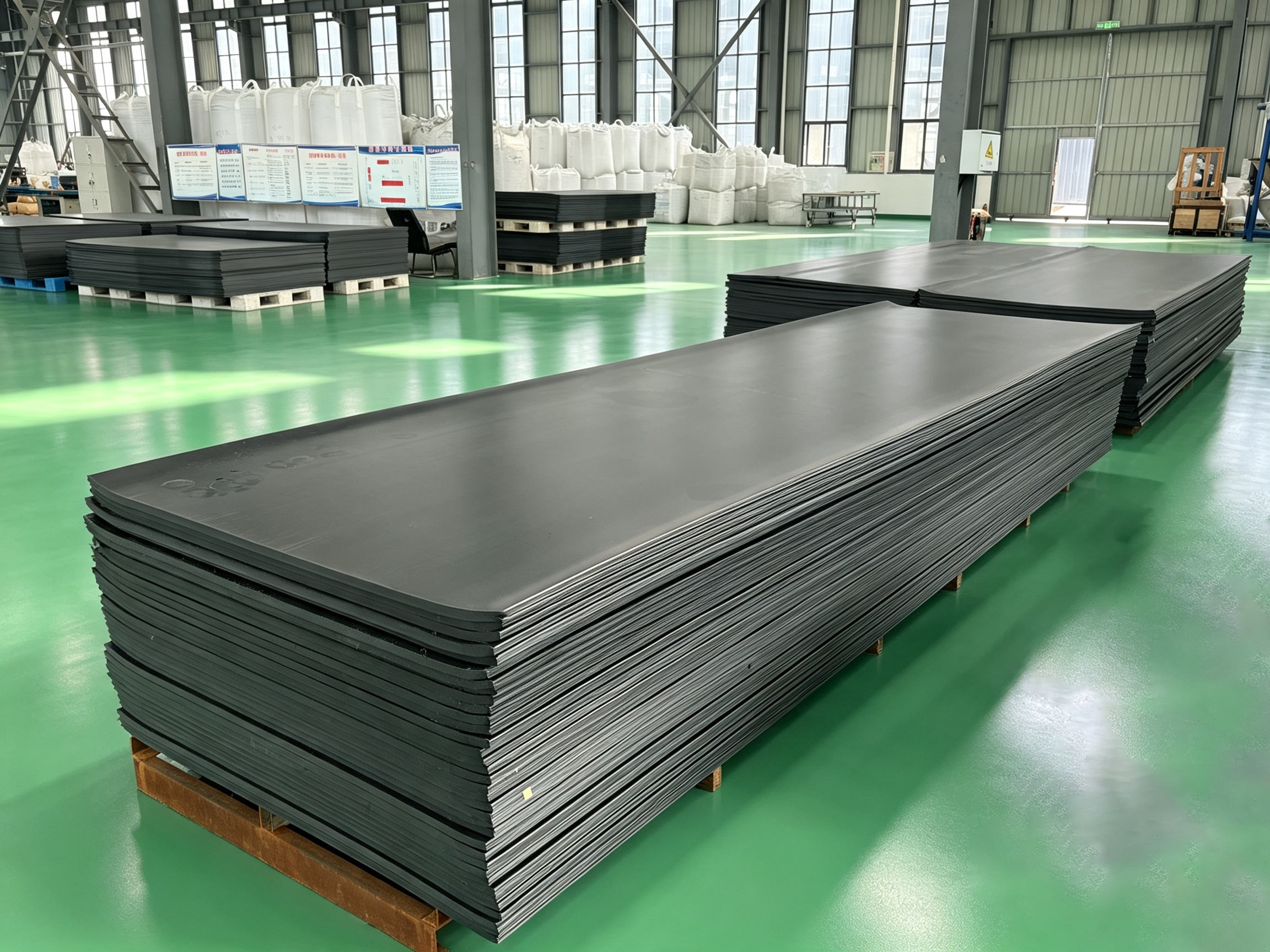
Industrial HDPE sheet in PE300 grade, produced by Tangyin Sanyou Engineering Plastic Co., Ltd. in thicknesses from 2 mm to 50 mm with custom sizes available.
Problem Definition: Why “HDPE, 10 mm” Is Not a Specification
Most HDPE sheet problems do not come from a bad sheet. They come from a purchase order that described the sheet as a material and a thickness only. HDPE is a family of formulations, not a single product: density, additive package, molecular structure, surface finish and thickness tolerance all vary, and each variation moves the failure point of the finished part.
In practice, four failure patterns recur in industrial projects:
- Medium mismatch. A sheet is ordered for “chemical resistance” in general, but the tank holds a specific concentration at a specific temperature. HDPE has excellent resistance to acids, alkalis, salts and oils by classification, yet compatibility is a function of medium, concentration and temperature, not of the material name.
- Temperature creep. The listed working temperature range of the PE300 HDPE sheet is −60 °C to +80 °C, with a melting point of 130–140 °C. A part designed inside that window at ambient temperature can still deform when the same vessel is cleaned with hot media or installed near a heat source.
- Under-specified mechanical duty. Impact strength, hardness and thickness are treated as interchangeable. They are not: a 20 kJ/m² impact rating and a 60–68 Shore D hardness describe different resistances, and neither substitutes for adequate thickness in a wear application.
- Outdoor assumptions. Standard HDPE is not UV-stabilized. Under prolonged sun exposure it can chalk and embrittle, which is why UV-stabilized grades exist as a separate option rather than a default.
The practical consequence: buyers who specify by thickness alone usually discover the gap at commissioning — at the weld seam, at the fixing hole, at the first summer of outdoor service — when re-cutting the sheet is far more expensive than specifying it correctly.
Industry Background: Where Industrial HDPE Sheet Is Actually Used
Industrial HDPE sheet sits in a small number of well-defined industrial contexts, and each one stresses the material differently. The application map from Sanyou’s HDPE sheet range covers chemical processing and water treatment, food and beverage processing, industrial manufacturing and automation, marine and shipbuilding, construction and infrastructure, agriculture and livestock farming, outdoor furniture and recreational equipment, signage and advertising, cold chain and refrigeration, and packaging, logistics and material handling.
Demand context supports the breadth of that list. Commercial market research cited in our reference data estimates that the sheets and films segment accounted for approximately 41.1% of global HDPE demand share in 2024 — a reminder that sheet is a mainstream industrial format, not a niche product, and that the buyer’s real problem is differentiation within a crowded category rather than availability.
That differentiation is where projects fail. Two suppliers can both quote “HDPE sheet, 1220 × 2440 mm, 10 mm, black” and deliver materially different parts, because the specification omitted grade, surface, UV status, thickness tolerance and machining behaviour. In chemical and food-processing environments, the operating condition adds a second layer: continuous or intermittent exposure to acids, alkalis, salts, wastewater, moisture, cleaning agents and moderately elevated temperatures, plus frequent washdown in hygienic areas.
Detailed Solution: The Parameters That Decide Performance
The parameters below are the ones that change outcomes in service. Each is stated with the value Sanyou lists for its PE300 HDPE sheet, together with what that value means for a project decision.
1. Chemical compatibility with the operating medium
HDPE sheet is specified with excellent resistance to acid, alkali, salt and oil, and it is used as a lightweight, corrosion-resistant and weldable fabrication material for chemical containment, liquid storage, ventilation systems, protective panels, laboratory equipment and industrial components. Compatibility should still be confirmed against the specific medium, concentration and service temperature, because a category-level statement covers the family, not every condition inside it.
2. Temperature resistance
Listed working temperature for the PE300 HDPE sheet is −60 °C to +80 °C, with a melting point of 130–140 °C. Selection guidance for industrial HDPE places continuous service at roughly −40 °C to 80 °C depending on grade and working conditions. Treat the upper end as a design ceiling for continuous load-bearing service, and keep welding and thermoforming well below the melting range.
3. Impact strength and stiffness
The listed impact strength is ≥ 20 kJ/m², tensile strength ≥ 22 MPa, elongation at break ≥ 300%, and hardness 60–68 Shore D. For components exposed to repeated impact or dropped loads — machine guards, jigs and fixtures, truck-bed-type panels — impact strength governs the grade choice; for structural panels and tank walls, stiffness and thickness interact, and increasing thickness is usually more effective than trading away impact performance.
4. Density
Density for the PE300 HDPE sheet is listed at 0.93–0.97 g/cm³. Density is a screening property, not a performance guarantee: two sheets inside that band can differ in additive package, molecular structure and surface, so density should be read together with tensile, impact and hardness values rather than in isolation.
5. Low moisture absorption
Water absorption over 24 hours is listed below 0.01%. This is the parameter that makes HDPE sheet suitable for wet, humid and washdown environments: the sheet does not take up water, does not swell, and does not provide a moisture path into a fabricated assembly. In wastewater-treatment equipment and food-processing surfaces, low absorption is also what keeps the surface cleanable rather than porous.
6. Weldability
HDPE sheet is weldable, and welding quality decides whether a fabricated tank is leak-tight. The selection requirement is not “weldable” in the abstract but reliable welding strength and leak-tight fabrication at the specified thickness, since thicker sheet needs a correspondingly controlled weld preparation and procedure. Where a vessel will hold liquid, weld procedure and welder qualification belong in the purchase specification alongside the material.
7. Machinability
The material is cuttable and CNC machinable, and custom fabrication covers cut-to-size, drilling, CNC machining, countersunk fixing holes and welding. Machinability matters most for components such as jigs, fixtures, guide rails and machine guards, where hole position, countersink depth and edge finish define fit. A sheet with inconsistent thickness will produce inconsistent countersink depth, which is why dimensional accuracy is checked as a separate parameter.
8. UV stabilization for outdoor use
UV resistance is offered as an option, and UV-stabilized grades are available. The distinction is material, not cosmetic: standard HDPE is not UV-stabilized and can chalk and embrittle under prolonged outdoor sun exposure, and carbon black is described in supplier technical guidance as a route to UV protection. For outdoor cabinets, signage, marine panels and open-air equipment, the RFQ should state the exposure environment and ask which stabilization route is used — not simply whether the sheet is “black”.
9. Surface finish and colour
Surfaces are available smooth or with anti-skid texture in diamond, orange-peel or embossed patterns, and standard colours include black, white, blue, green, yellow and custom shades. Surface choice is functional: a textured orange-peel HDPE sheet improves grip and hides scuffing on working surfaces, while a smooth sheet is easier to clean on food-contact tables and cutting boards.
10. Dimensional accuracy and thickness tolerance
Sheet formats include 1000 × 2000 mm, 1220 × 2440 mm, 1500 × 3000 mm and 2000 × 4000 mm, with custom sizes and thicknesses available. Thickness tolerance, flatness and hole position are what determine whether a CNC-machined component assembles without rework; they should be written into the specification as measurable requirements rather than left to “standard tolerance”.
11. Coefficient of friction
The listed coefficient of friction is 0.15–0.25 — a low-friction surface. This is a benefit on chute liners, guide rails and material-handling components, and a caution on walking surfaces and inclined work platforms, where a textured surface or a different product category (such as an HDPE ground protection mat) is the correct choice.
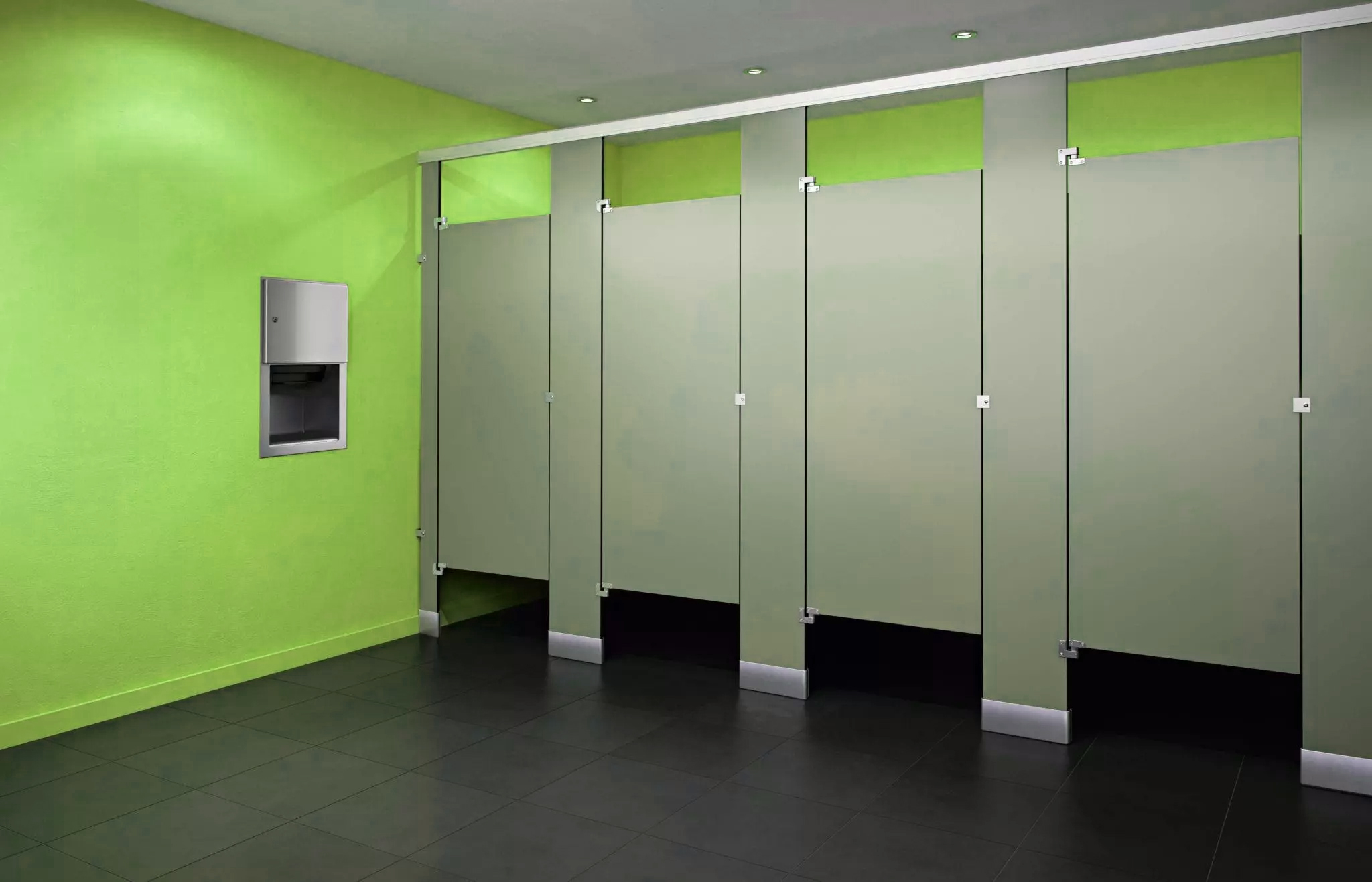
Industrial HDPE sheet is used for chemical tanks, wastewater-treatment equipment, machine guards, outdoor cabinets and custom-fabricated components.
Reference Parameters: Sanyou HDPE Sheet (PE300)
| Property | Listed value |
|---|---|
| Material | Virgin HDPE (High Density Polyethylene) |
| Density | 0.93–0.97 g/cm³ |
| Thickness | 2–50 mm (customized available) |
| Sheet sizes | 1000 × 2000 mm / 1220 × 2440 mm / 1500 × 3000 mm / 2000 × 4000 mm (customized available) |
| Surface | Smooth or anti-skid texture (diamond / orange peel / embossed) |
| Colours | Black / white / blue / green / yellow / customized |
| Tensile strength | ≥ 22 MPa |
| Elongation at break | ≥ 300% |
| Hardness | 60–68 Shore D |
| Impact strength | ≥ 20 kJ/m² |
| Melting point | 130–140 °C |
| Working temperature | −60 to +80 °C |
| Water absorption (24 h) | < 0.01% |
| Coefficient of friction | Low, 0.15–0.25 |
| Chemical resistance | Acid, alkali, salt, oil |
| UV resistance | UV stabilized |
| Certification | ISO 9001 |
Step-by-Step Breakdown: A Six-Step Selection Workflow
The workflow below converts a project description into a purchase specification. It runs in the order the risk appears — medium first, cosmetics last.
- Define the medium and its concentration. Record every fluid the sheet will contact, including cleaning agents and intermittent spills, not only the main process liquor. This determines whether standard HDPE chemistry is sufficient or whether the medium needs written confirmation before quoting.
- Fix the temperature window, including cleaning. State continuous service temperature and peak cleaning temperature separately. Confirm the design stays inside the −60 °C to +80 °C working range of the PE300 sheet, and treat anything approaching the 130–140 °C melting point as outside the material’s role.
- Classify the mechanical duty. Decide whether the part is primarily a containment panel (stiffness and weld integrity), an impact-exposed guard or fixture (impact strength ≥ 20 kJ/m² and hardness 60–68 Shore D), or a low-friction sliding surface (coefficient of friction 0.15–0.25). One sheet rarely optimizes all three, so rank them.
- Set the environment: indoor, outdoor or washdown. Indoor and washdown applications can use standard sheet; long-term outdoor exposure should specify UV-stabilized grade. Add colour and surface at this stage — orange-peel or diamond texture for grip, smooth for hygiene.
- Choose the fabrication route and fixing method. Welded fabrication (tanks, ducts, liners) requires reliable welding strength and leak-tight joints. Machined components (guards, jigs, rails) require cut-to-size, drilling and CNC machining, with countersunk or counterbored fixing holes specified by drawing. The fixing detail determines the minimum thickness, because a countersink needs material around it.
- Write the acceptance criteria and request documents. Specify grade, thickness with tolerance, sheet size, colour, surface, UV status, and — for food-contact or regulated use — the compliance documentation required. Then confirm the supplier’s inspection routine: incoming raw material inspection, in-process thickness and dimension checks, surface inspection and final pre-shipment inspection.
Use Cases: Matching the Parameter Set to the Project
Chemical storage tanks and process vessels
The governing parameters are chemical compatibility, temperature resistance, weld strength and leak-tightness. HDPE sheet serves as a lightweight, corrosion-resistant and weldable fabrication material for chemical containment and liquid storage, and it operates under continuous or intermittent exposure to acids, alkalis, salts, wastewater, moisture, cleaning agents and moderately elevated temperatures. Thickness typically lands in the 6–20 mm band for tank walls, with the weld procedure specified separately.
Wastewater-treatment equipment
Wastewater duty combines moisture, chemical load and continuous operation. Low water absorption below 0.01% prevents swelling and keeps surfaces cleanable, while chemical resistance covers the acids, alkalis and salts present in treatment streams. For covers, baffles, weirs and equipment panels, dimensional accuracy matters as much as chemistry, because panels are usually bolted to a frame.
Food processing tables and cutting boards
Food-contact surfaces are specified on three parameters: a non-toxic, easy-to-clean surface, low moisture absorption, and a documented food-contact grade. Sanyou lists food-grade availability as an option and presents HDPE sheet made from food-grade polyethylene resin for food processing, cutting boards and sanitary applications. Because a grade label is not the same as regulatory conformity, the purchase specification should also name the declaration of compliance required for the destination market.
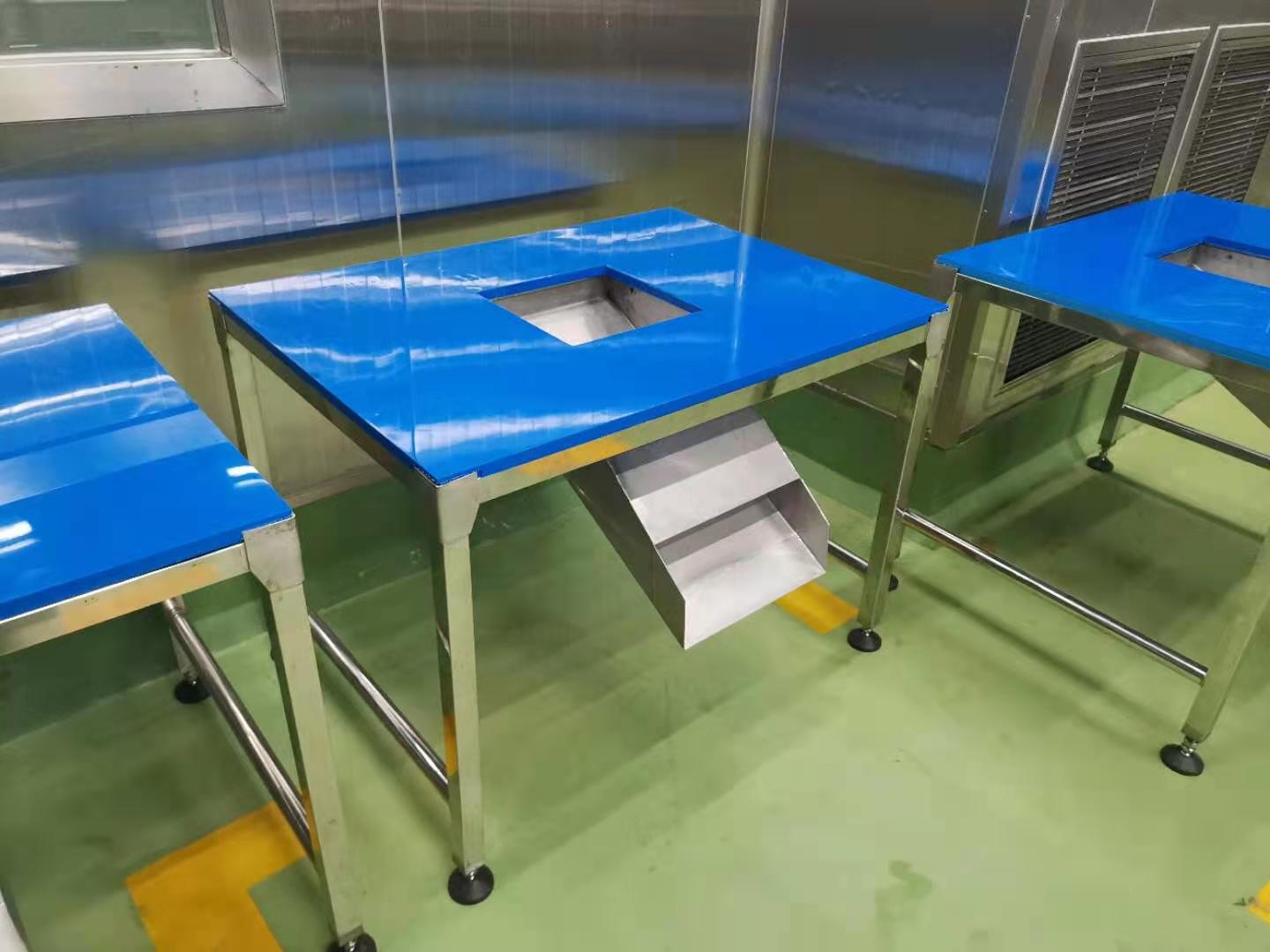
Food grade HDPE sheet is used for food processing tables and cutting boards, where low moisture absorption and an easy-to-clean surface are the selection drivers.
CNC-machined components with countersunk fixing holes
Machine guards, jigs, fixtures, wear strips and guide rails are machined parts, not panels. Selection depends on machinability, thickness consistency and impact strength. Sanyou’s custom fabrication covers cut-to-size, drilling, CNC machining, countersunk and counterbored holes, and drawing review support, which is the practical route for components defined by a drawing rather than a sheet size.
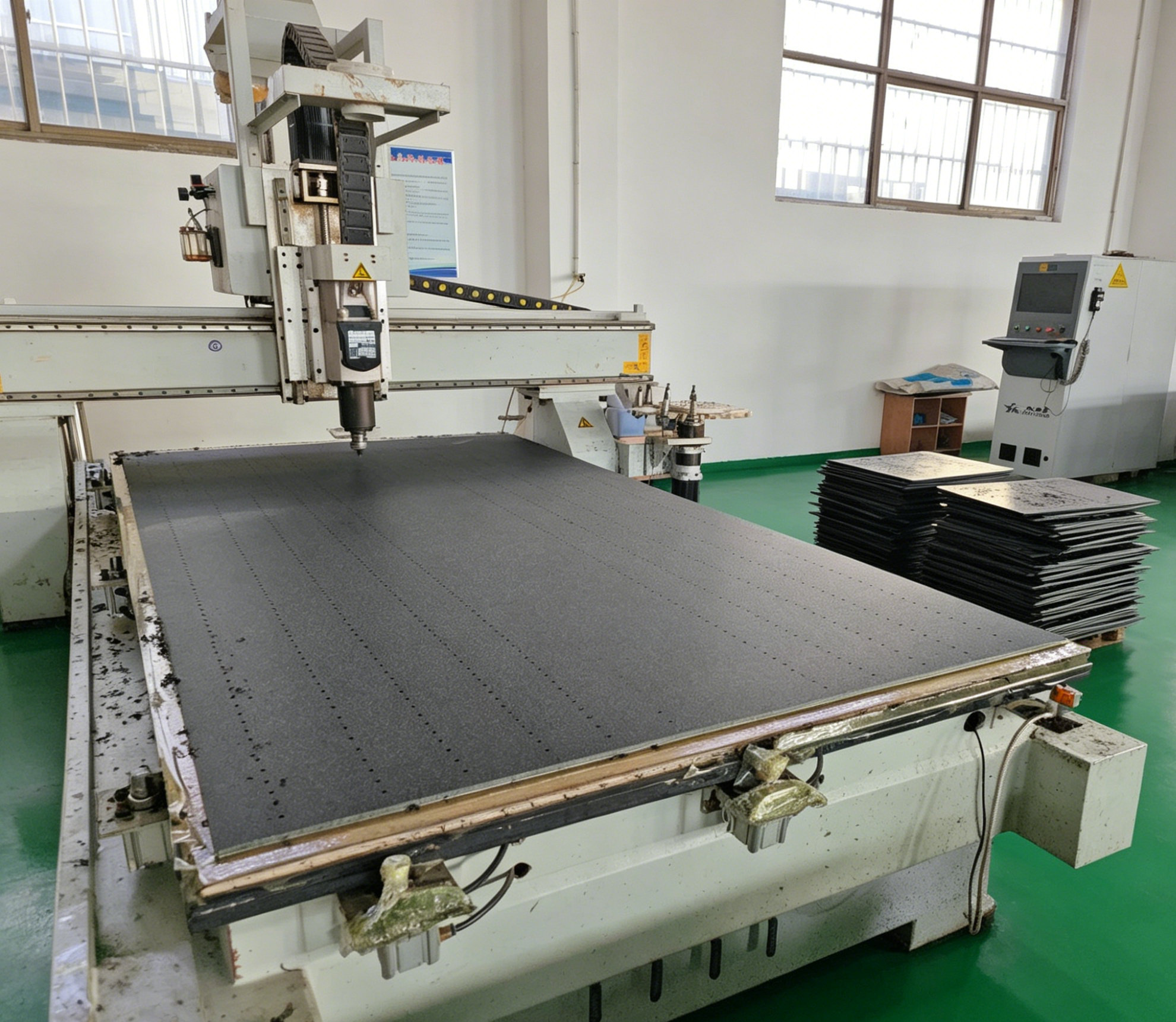
CNC machining of industrial HDPE sheet: cut-to-size, drilling, countersunk fixing holes and drawing-based component fabrication.
Outdoor and marine-adjacent equipment
Outdoor cabinets, marine panels and open-air equipment add UV exposure to the moisture and salt load. UV-stabilized grades are the correct specification here; standard sheet can chalk and embrittle under prolonged sun exposure, and colour alone does not indicate UV protection.
Documented project experience
An Oceania-based industrial customer took a custom supply of 20 tons of HDPE sheet — customized thickness, dimensions, colour and surface finish — for chemical tanks, wastewater-treatment equipment, food-processing surfaces, machine guards, outdoor cabinets and custom-fabricated components over a two-year project. Reported outcomes were improved corrosion and moisture resistance, reduced maintenance requirements, and simplified fabrication and cleaning in wet or chemically exposed environments.
Comparison Table: Which HDPE Sheet Option Fits Which Project
The table compares the grade options a buyer is most often offered. Each row reflects documented product and supplier-guidance facts; the watch-out column states the limit that a buyer must close in the RFQ.
| Option | Typical project fit | Documented characteristics | What the buyer must confirm |
|---|---|---|---|
| Virgin HDPE sheet (PE300) | Food-contact, potable-water and high-reliability projects requiring stable mechanical performance | Density 0.93–0.97 g/cm³; tensile ≥ 22 MPa; elongation ≥ 300%; impact ≥ 20 kJ/m²; ISO 9001 | Resin grade, thickness tolerance and the compliance declaration for the target market |
| Recycled HDPE sheet | Non-critical anti-corrosion lining and cost-sensitive projects without strict mechanical requirements | Offered as a grade option; performance depends on the recycled grade and application conditions | Recycled-content definition, batch consistency and suitability for the specific medium |
| UV-stabilized HDPE sheet | Long-term outdoor use: outdoor cabinets, signage, marine and open-air equipment | UV stabilization listed as an option and UV-stabilized grades available; standard HDPE is not UV-stabilized and can chalk and embrittle in prolonged sun | Stabilization route (for example carbon black per supplier guidance), exposure duration and expected service environment |
| Food grade HDPE sheet | Food processing tables, cutting boards and sanitary surfaces | Food-grade availability listed as an option; sheet presented as made from food-grade polyethylene resin | Declaration of compliance, resin and additive traceability, and applicable migration or conformity testing |
| Orange peel / textured HDPE sheet | Working surfaces needing grip and scuff masking; low-friction duty is not the goal | Anti-skid textures in diamond, orange peel or embossed patterns on a smooth or textured base sheet | Pattern depth and whether the texture interferes with cleaning or sealing |
| Smooth HDPE sheet | Hygienic tables, liners and parts where cleaning and low friction dominate | Coefficient of friction 0.15–0.25; water absorption (24 h) below 0.01% | Surface finish specification and cleanliness requirement after fabrication |
Supplier Capability: What to Verify Before Ordering
Tangyin Sanyou Engineering Plastic Co., Ltd. is a manufacturer of engineering plastic and rubber products — HDPE sheet, UHMWPE sheet, PP sheet, HDPE sandwich board and ground protection mat — founded in 2001, operating a 40,000 m² factory with 80 employees, 10 engineers and an annual output of 120,000 tons, exporting about 70% of production to North America, Western Europe, Central Europe, the Middle East, Oceania and Southeast Asia.
For sheet orders, the capabilities that matter at the evaluation stage are: OEM/ODM custom fabrication covering thickness, size, colour, surface texture, material grade and UV stabilization, plus cut-to-size, CNC machining, drilling, welding and custom packaging; monthly capacity of approximately 800 metric tons; MOQ of 1,000 kg per specification and colour, with trial orders negotiable; lead time of 15–20 days after order confirmation and deposit, subject to quantity and customization requirements; and a quality routine that runs from incoming raw material inspection through in-process thickness and dimension checks and surface inspection to final pre-shipment inspection, with records available on request.
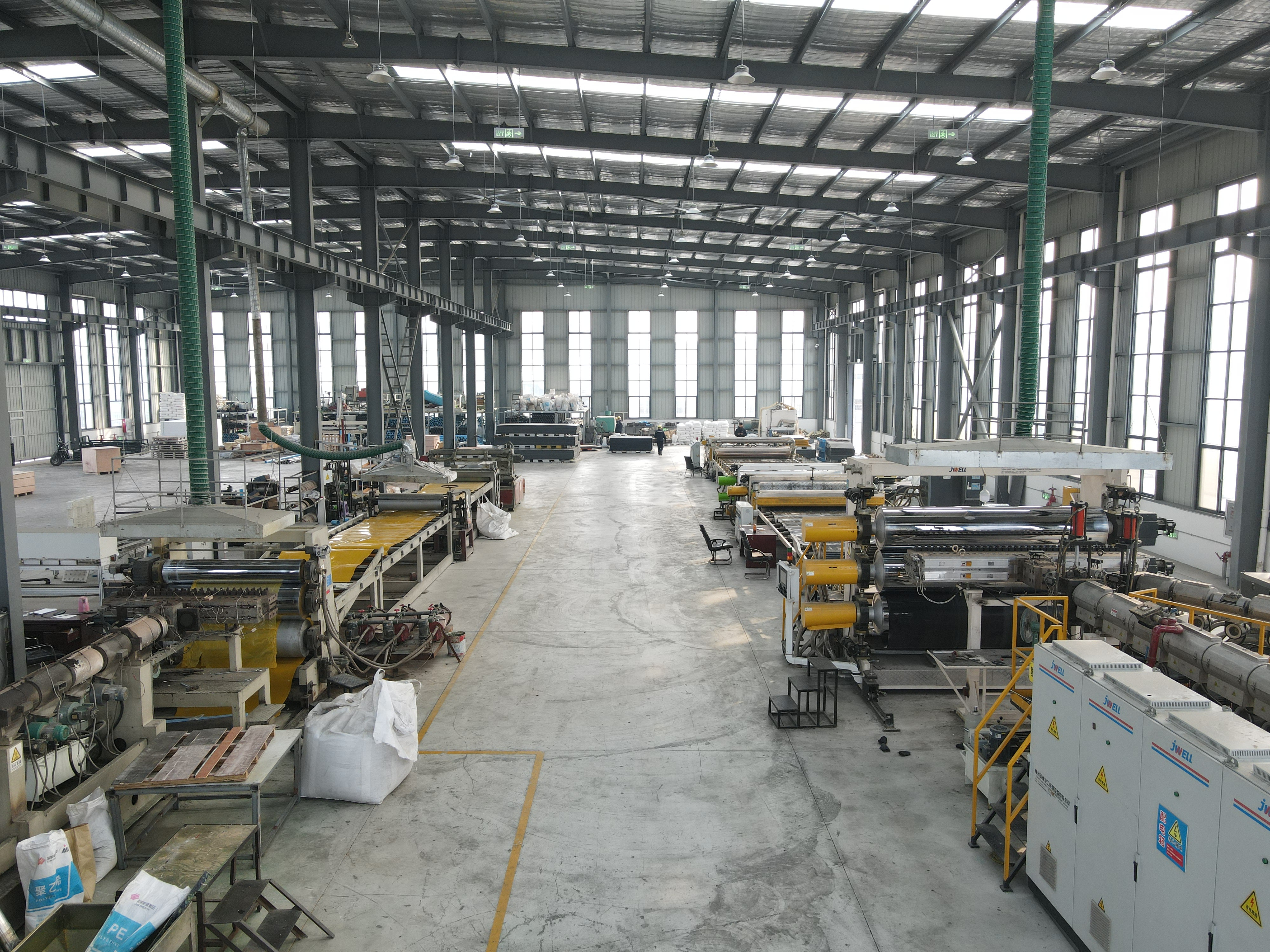
HDPE sheet extrusion line at the Sanyou factory in Tangyin County, Henan, China.
Frequently Asked Questions
1. What documentation should I request for food grade HDPE sheet used in food processing equipment?
Request a declaration of compliance for the destination market, together with resin and additive traceability. A supplier’s food-grade label is not by itself proof of conformity: Sanyou lists food-grade availability as an option and presents its HDPE sheet as made from food-grade polyethylene resin, which should be paired with jurisdiction-specific conformity documentation for the finished sheet. It is also reasonable to ask for the quality documents behind the ISO 9001 certification and for the inspection records covering the supplied batch.
2. Can a manufacturer supply virgin food-grade HDPE sheet cut and machined for food processing equipment?
Yes, where the supplier offers both the grade and the fabrication service. Sanyou’s virgin HDPE sheet (PE300) is listed with thickness from 2 mm to 50 mm, sheet sizes including 1000 × 2000 mm, 1220 × 2440 mm, 1500 × 3000 mm and 2000 × 4000 mm, and custom sizes available, in black, white, blue, green, yellow or custom colours, smooth or textured. Custom fabrication covers cut-to-size, drilling, CNC machining, countersunk and counterbored holes, welding and drawing review, which is the combination needed for food processing tables, cutting boards and machined HDPE components.
3. What drives the cost of a custom-cut industrial HDPE sheet order?
Four commercial variables dominate: grade and additive package, thickness and sheet size, colour and surface texture, and order quantity. Because colour and specification change run configuration, Sanyou sets an MOQ of 1,000 kg per specification and colour, and states that trial orders are negotiable. Price is quoted against a defined specification rather than published as a list, so the fastest route to a comparable figure is a quotation request that states grade, thickness, size, colour, surface, quantity and the fabrication steps required.
4. Can I evaluate the material before placing a full production order?
Evaluation is normally handled in two ways: a trial order under the negotiable trial-order policy rather than the standard 1,000 kg minimum, and technical support at the specification stage. Sanyou’s after-sales and technical support covers material selection guidance, drawing review, fabrication advice, documentation support and complaint handling, which lets a buyer close the chemical-compatibility, thickness and fixing questions before committing to production volume.
5. What is the lead time for custom HDPE sheet and how is it confirmed?
The stated lead time for custom fabrication is 15–20 days after order confirmation and deposit, subject to quantity and customization requirements. Because colour, texture, thickness and machining content all affect scheduling, the lead time should be confirmed in writing against the final specification rather than assumed from the general range. For projects with installation dates, state the required delivery window with the RFQ so that it can be checked against the current schedule before the order is placed.
Conclusion: Specify the Function, Then the Sheet
Industrial HDPE sheet selection is a short, ordered decision: medium, temperature, mechanical duty, environment, fabrication route, then thickness, colour and surface. When those six inputs are written down, the specification stops being “HDPE, 10 mm” and becomes something a supplier can quote, inspect and machine to — density 0.93–0.97 g/cm³, impact ≥ 20 kJ/m², water absorption below 0.01%, working range −60 °C to +80 °C, UV status stated, thickness and fixing detail defined.
The difference between a sheet that lasts and one that fails early is rarely the polymer. It is whether the RFQ captured the conditions the part will actually meet. Buyers who specify function first get a comparable quotation, a verifiable batch and a component that fits on the first assembly.
Next Step: Quote, Sample or Full Catalog
Send your grade, thickness, sheet size, colour, surface and fabrication drawing to Sanyou for a specification-based quotation, or request a trial order to validate the material against your medium and temperature window.
Email: sandy@syuhmwpe.com | Tel / WhatsApp: +86 199-3737-2858 | Website: www.syuhmwpe.com
Address: Tengfei Avenue (Industrial Park), Yigou Town, Tangyin County, Henan, China
Download the Sanyou Product Catalog (PDF)Have Questions or Need More Details?
Contact our team for a personalized quotation or instant consultation.
Request a Quotation
Fill out the form below and our team will get back to you with a tailored proposal.
WhatsApp Direct Chat
Prefer to chat in real-time? Message us on WhatsApp for instant assistance & quick answers.
- Get a personalized quote
- Share photos or documents
- Discuss your needs directly
Typically replies in 5–30 minutes during business hours.