
Industrial HDPE Sheet Compliance: US, EU, UK, Australia, UAE
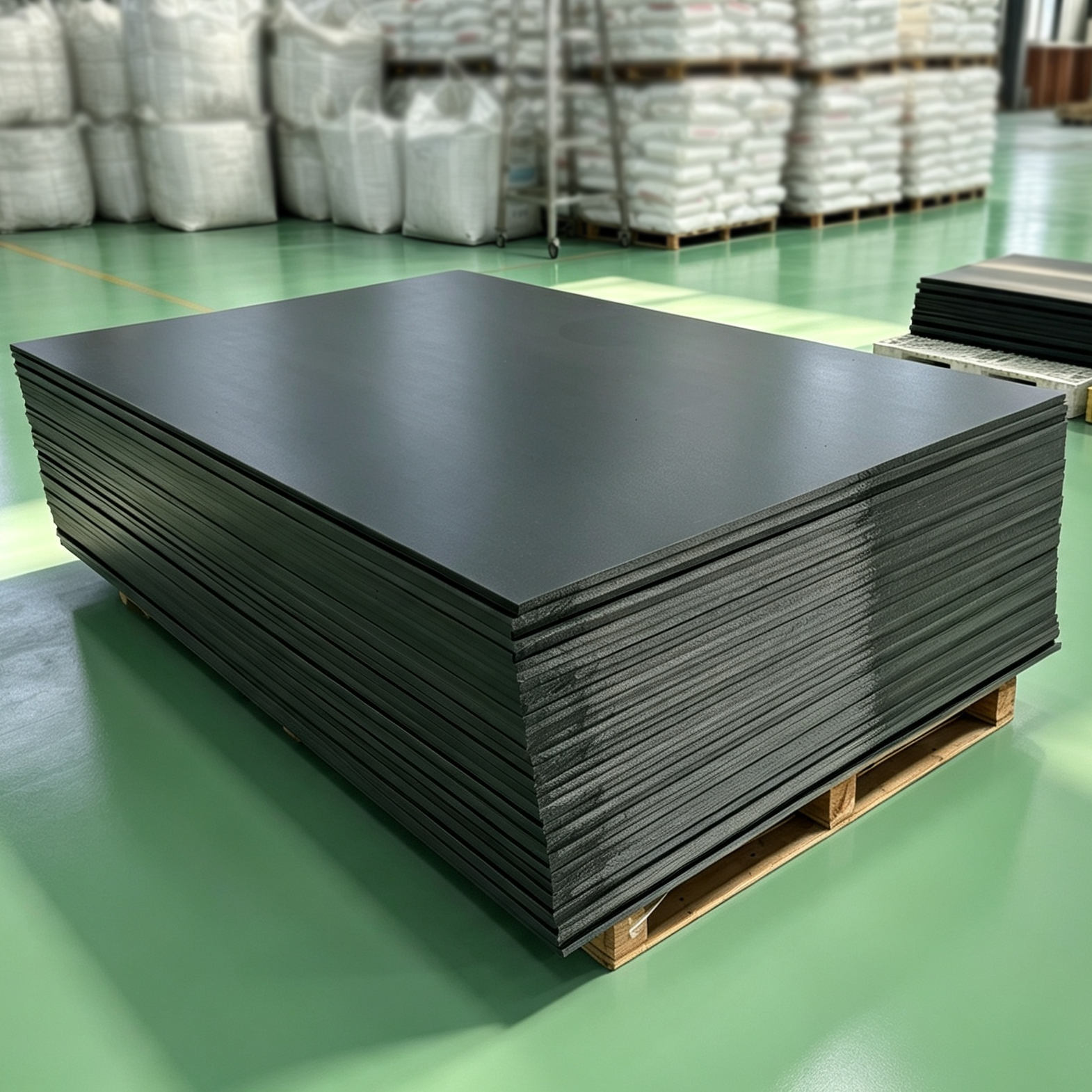
Compliance for industrial HDPE sheet is decided by the application, not by the material name. A 10 mm black sheet lining a chemical tank, a food-contact cutting table, a port fender facing and a sun-exposed outdoor cabinet panel are all sold as HDPE sheet, yet each one needs a different evidence file — and that file is read differently by buyers in the United States, the EU, the United Kingdom, Australia and the UAE.
This guide works through the four application drivers that generate most compliance questions, converts each into the documents to request at RFQ and the checks to run at goods-in, then explains what actually changes from region to region. It deliberately does not name specific certificates or issuing bodies. The objective is narrower and more useful: help a procurement team specify the evidence it needs, so the paperwork a supplier sends can be tested against the real application and the real market. Regional requirements change, so final acceptance criteria should be confirmed with the project's own quality and regulatory functions.
Why the application defines the compliance file
Four application drivers account for most of the compliance material attached to industrial HDPE sheet orders: food contact, marine and port exposure, long-term outdoor UV and moisture, and chemical containment with welded fabrication. The base polymer is the same in all four. The evidence is not.
- Food contact asks about feedstock, additives and cleanability.
- Marine exposure asks about water absorption, impact performance and salt resistance.
- Outdoor service asks about the stabilizer package and colour.
- Chemical containment asks about compatibility with a named medium and about weld records.
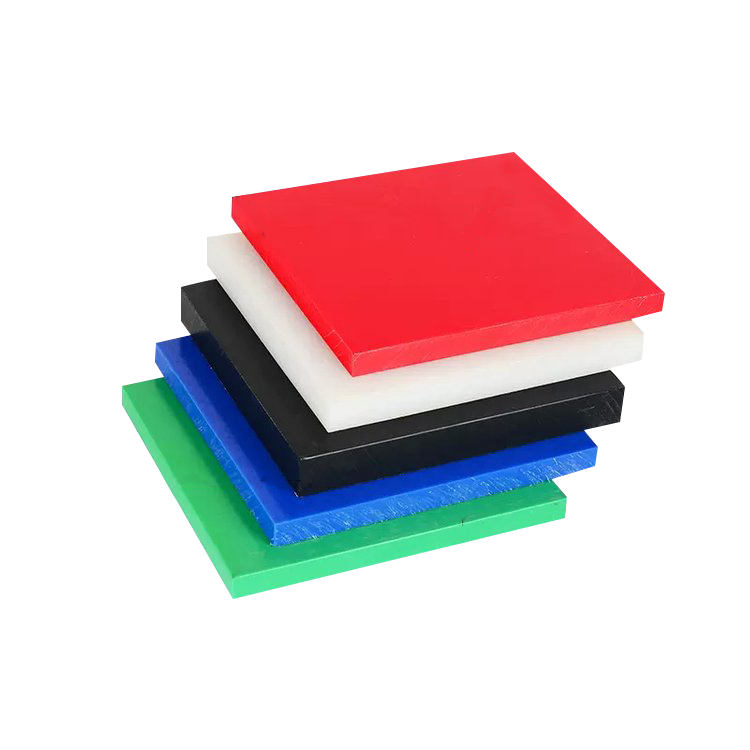
The second variable is grade and format. Within the PE300 HDPE sheet range, thickness spans 2–50 mm, standard formats include 1000 × 2000 mm, 1220 × 2440 mm, 1500 × 3000 mm and 2000 × 4000 mm, and sheets are supplied smooth or with diamond, orange-peel or embossed texture in black, white, blue, green, yellow or a custom colour. Each of those is an additive or process decision, and each can change which document a buyer needs: a colorant or a UV stabilizer is exactly the input a food-contact reviewer will ask about, while thickness and joint detail decide what a tank fabricator must prove.
Virgin versus recycled HDPE sheet: what changes in the evidence file
Virgin and recycled sheet are not two price points on the same document set. Grade selection changes both what the sheet can be used for and what a supplier can truthfully declare.
Virgin HDPE sheet is the recommended starting point for food-contact, potable-water and high-reliability projects, where stable mechanical performance and hygiene requirements matter. The PE300 range is specified on virgin HDPE with a density of 0.93–0.97 g/cm³.
Recycled industrial HDPE sheet is positioned for non-critical anti-corrosion lining and cost-sensitive work where strict mechanical requirements do not apply; actual performance should be confirmed against the recycled grade and the application rather than assumed from the category name.
Three practical consequences follow for a procurement file:
- Feedstock traceability becomes a document, not a claim. Ask which resin is used, whether recycled content is present, and — for recycled grades — how the input stream and contamination are controlled.
- Batch data replaces brochure data. The PE300 range is specified at tensile strength ≥ 22 MPa, elongation at break ≥ 300% and impact strength ≥ 20 kJ/m². A recycled batch needs its own numbers, not a generic datasheet copied across the range.
- Density does not settle the question. A reading inside 0.93–0.97 g/cm³ cannot prove virgin content, because the band covers both. The batch statement plus mechanical data is the usable evidence.
Additive disclosure matters more than the virgin/recycled label in food-contact files, because UV stabilizers, colorants and anti-static additives are the usual review points. If a document set shows both a recycled-content statement and a food-contact declaration, ask the supplier to state which sheet in the delivery the declaration covers.
Food-contact applications: processing lines, cutting tables and conveyors
What the requirement actually is
A food-contact surface has to do two things: stay cleanable under the plant's real washdown regime, and not transfer harmful substances into food at the temperature and contact time used. HDPE supports the first — the PE300 range absorbs less than 0.01% water in 24 hours, is specified as non-toxic and offers an easy-to-clean surface — but neither property on its own constitutes food-contact compliance. Compliance belongs to the finished grade, its additives and its declared use.
What to request at RFQ
- A food-contact suitability declaration that names the exact grade, colour and surface finish, not just the product family.
- A written statement that the sheet is produced from virgin resin, with the resin grade identified.
- Migration test data from an accredited third-party laboratory, stating the simulants, temperature and duration, and describing the test article by thickness, colour and texture.
- Disclosure of additives: UV stabilizer, colorant, slip or anti-static additive, and any processing aid.
- Surface finish plus a recommended cleaning and sanitising regime, so the plant can judge whether the texture fits its cleaning validation.
- Material safety data and a packaging statement covering protective film, transit protection and segregation from non-food stock.
- Where the sheet will be welded or machined into tables and conveyors, the fabrication records for those operations.
Acceptance evidence at goods-in
Check the batch certificate of analysis against the declared grade, measure thickness against the stated tolerance, confirm colour and surface against the approved sample, inspect protective film and edges, verify that food-grade stock was segregated, and retain a cut sample from each batch inside the project file. Textured sheet is often chosen for cutting tables and conveyor guides because it reduces slip; the trade-off is a larger surface for residue, so the texture decision belongs with cleaning validation, not with the datasheet alone.
Marine-grade selection: port, shipbuilding and fender applications
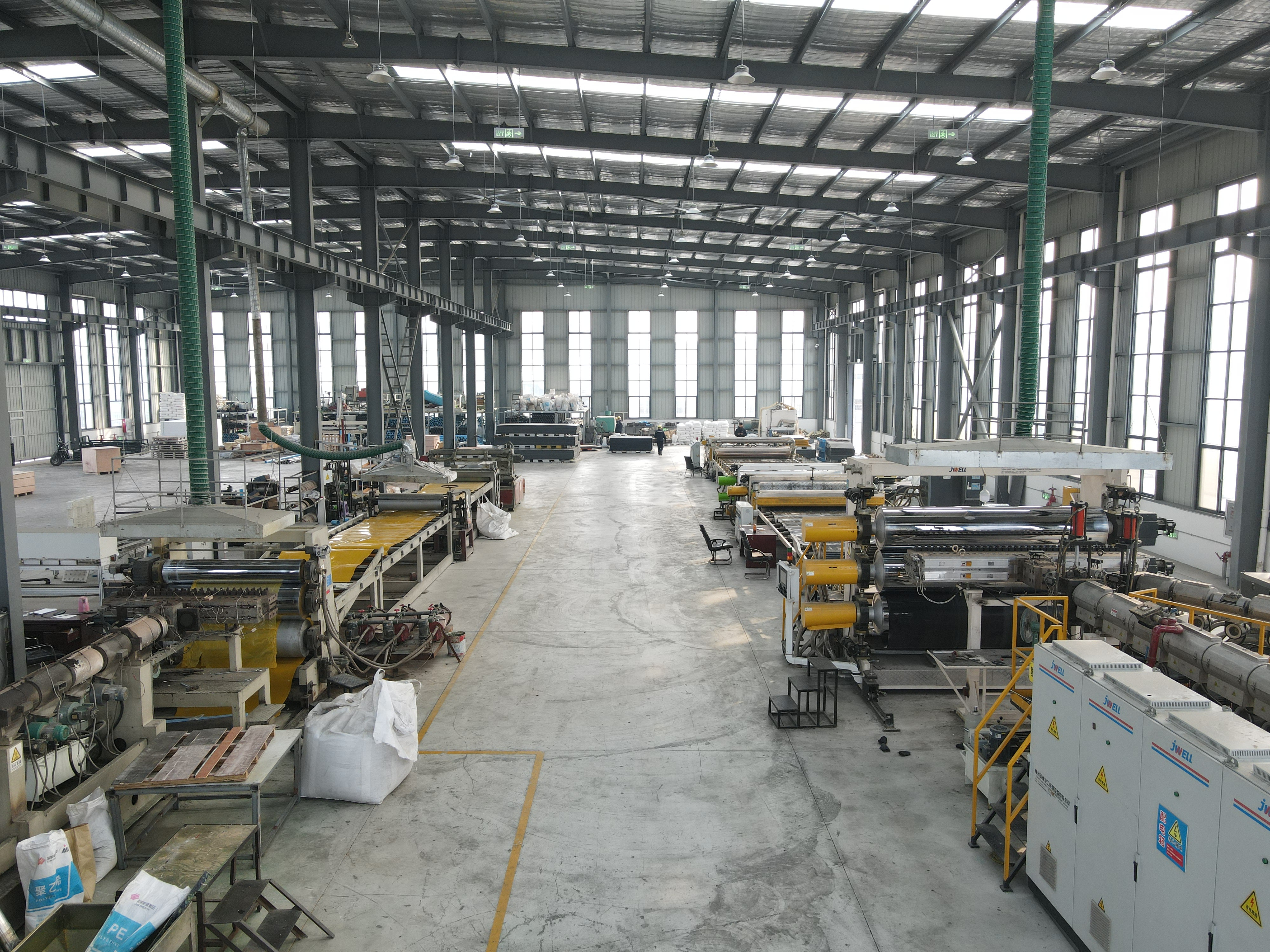
Marine-grade HDPE sheet is a selection claim rather than a defined material. Two suppliers can both offer "marine grade" with different resin, different stabilizer loading and different impact performance, so the first RFQ question is what the designation means in writing.
The technical core is water absorption, impact and salt exposure. A water absorption below 0.01% in 24 hours means the sheet does not waterlog; an impact strength of at least 20 kJ/m² in the PE300 range describes the impact envelope to quote against; and the same range is specified for excellent resistance to acid, alkali, salt and oil. For exposed berth and deck work, UV stabilization is part of the marine specification, not an upgrade.
Ask for the grade statement, impact data for the thickness actually supplied, the UV statement, the colour, dimensional tolerance and flatness for panel fit, and the fixing detail — countersunk holes, hardware grade and expansion allowance. For fender facings, add the impact and bearing assumptions behind the panel design, since the facing is a replaceable wear part rather than a structural member. If a supplier cannot quote an impact value for the grade offered, treat that as a documentation gap to close before award, not as proof of poor performance.
UV-stabilized grades for outdoor and 24/7 wet exposure
The PE300 range is supplied UV stabilized, with a working temperature of −60 °C to +80 °C and a melting point of 130–140 °C. "UV stabilized" on a datasheet is a starting point, not a specification. The useful questions are how much stabilization, in which additive system, and what evidence exists for retained properties after exposure.
- Stabilizer statement: additive type and loading, or the exposure test method and duration with property retention figures.
- Colour and geometry: a black sheet and a white sheet behave differently in direct sun. Surface temperature can run above ambient, and with a working ceiling of +80 °C on this range, colour choice and the way panels are restrained belong in the same decision as the UV package.
- Washdown chemistry: cleaning agents and process splashes that attack the stabilizer package shorten outdoor life more than sunlight alone in some plants.
- Service combination: in wastewater and scrubber exteriors, UV, moisture and chemical exposure act together, so the file should combine the UV statement with the chemical compatibility entry rather than treat them as separate approvals.
Chemical compatibility and leak-tight weld strength: tanks, scrubbers and wastewater equipment
Chemical compatibility is the most frequently mis-specified item in an HDPE sheet RFQ, because "excellent acid, alkali, salt and oil resistance" is a general rating rather than an answer for a named medium. Compatibility depends on the medium, its concentration, the service temperature and the presence of other chemicals in the same vessel.
At RFQ, ask for compatibility data for the exact medium at the exact concentration and temperature, the service-life assumption behind it, wall thickness and structural design for the tank or scrubber, the welding procedure and welder qualification, weld test results with the test frequency, the leak test method with records for the fabricated item, and flatness or dimensional tolerance for lining panels.
Thickness selection guidance for HDPE sheet sets 5–6 mm for light-load lining, 6–20 mm for tank walls and structural panels, and 20–50 mm for heavy-wear chute liners. Those bands are a starting point for the design conversation, not a substitute for it.
Leak-tightness is a fabrication outcome, not a sheet property. A sheet can be fully weldable and still leak if the weld procedure, the welder and the joint preparation are uncontrolled. That is why the acceptance evidence for a tank belongs with the fabricator's records — procedure, qualification, weld tests, leak test — rather than with the resin datasheet.
Region by region: what actually changes
The technical evidence is broadly the same everywhere. What changes is who a declaration is addressed to, which language the buyer wants, how deep the traceability has to go, and which risk the market cares about most.
United States and Canada
North American projects usually work in the 4 × 8 ft sheet format, which corresponds to the 1220 × 2440 mm standard size in the PE300 range. Buyers typically want English-language declarations, batch-level certificates and a completed supplier quality questionnaire. North America is one of Sanyou's main markets inside an export share of about 70% of output. Canadian projects are often quoted alongside US ones; confirm at RFQ whether a single North American document set is acceptable or country-specific declarations are required.
Germany and France
EU-destination orders for the HDPE sheet range are supported by the EU conformity documentation held for that range. Buyers in Germany and France usually want more detail inside the declaration: the resin grade, the additive package, recycled-content traceability and, for fabricated equipment, welding qualification records. Declarations are sometimes requested in German or French, so settle language at RFQ rather than after documents have been issued.
United Kingdom
The UK is a separate documentation market from the EU. Buyers commonly ask for a declaration addressed to the UK market rather than an EU-addressed copy, while the technical pack behind it — impact, water absorption, UV statement, chemical data — stays the same. Confirm which document set is acceptable before the order is released; the answer often depends on the end user's own quality system.
Australia
Oceania is one of Sanyou's main markets, and Australian HDPE sheet projects frequently combine chemical, food and outdoor requirements in a single delivery. A documented example: an Australian industrial equipment manufacturer and chemical tank fabricator ordered a custom supply of 20 tons of HDPE sheet with custom thickness, dimensions, colour and surface, used for chemical tanks, wastewater-treatment equipment, food-processing surfaces, machine guards and outdoor cabinets. Over a two-year reference period the reported result was improved corrosion and moisture resistance, reduced maintenance, and simpler fabrication and cleaning. Distance makes the pre-shipment record more important than usual: agree the inspection record and packaging specification before production, because re-inspection on arrival is expensive.
United Arab Emirates
Middle East projects put heat and sunlight ahead of everything else. The relevant questions are the UV statement, the colour, the service-temperature ceiling of the selected grade and a fixing detail that allows for expansion. Moisture absorption still matters for washdown and process exposure, but UV is the dominant ageing route. Import formalities sit with the importer; what the sheet supplier should provide is the technical pack that both the importer's clearance and the end user's QA function will ask for.
Documentation error to avoid: assuming that a declaration accepted on one project will be accepted on the next. The addressee, language and depth of traceability are project-specific, and the cheapest correction is a question at RFQ.
RFQ and incoming-inspection checklist
| Application driver | Ask at RFQ | Accept at goods-in |
|---|---|---|
| Food contact | Virgin resin statement, additive disclosure, migration test data naming grade and colour | Batch certificate, thickness, surface, colour, film integrity, segregation |
| Marine and port | Grade definition, impact data at the supplied thickness, salt resistance, UV statement | Dimensional and flatness check, panel identity, fixing detail |
| Outdoor and UV | Stabilizer type and loading or exposure data, colour, service temperature ceiling | Colour match, surface condition, edge finish |
| Chemical containment | Compatibility entry for medium, concentration and temperature, thickness design | Sheet thickness and flatness, weld consumables identity |
| Welded fabrication | Weld procedure, welder qualification, weld test frequency, leak test method | Weld test and leak test records for the fabricated item |
| Recycled content | Feedstock and contamination control, batch mechanical data, intended non-critical use | Batch statement, sample retention, colour consistency |
Goods-in checks that apply to every delivery: batch identification marking, thickness and dimension against tolerance, flatness, surface and texture, colour against the approved sample, protective film and packaging, completeness of records, and storage conditions. Where the sheet is welded into equipment, weld procedure, welder qualification and leak test records belong in the same file.
Where Sanyou hdpe sheet fits the file
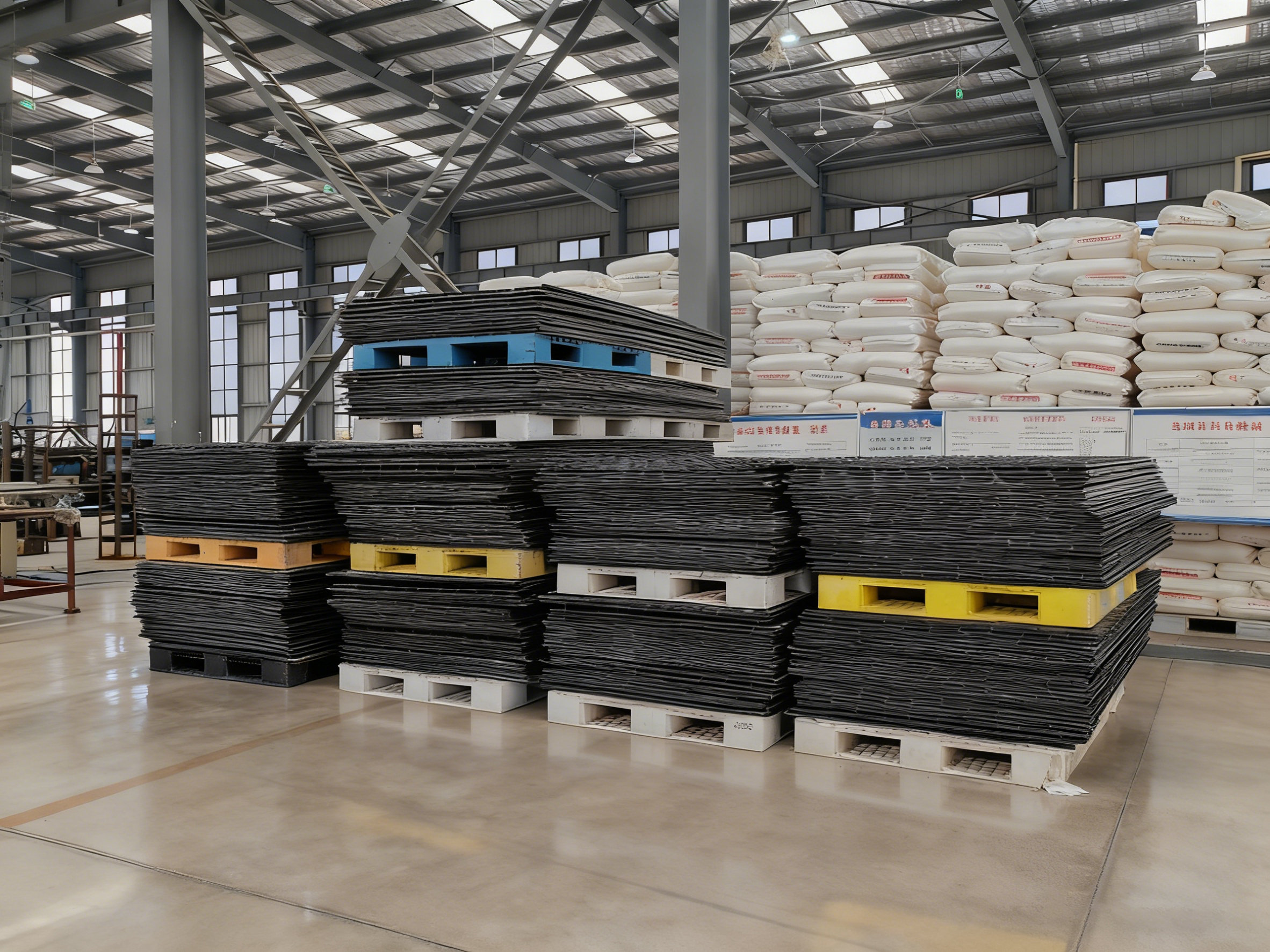
Tangyin Sanyou Engineering Plastic Co., Ltd. — the company behind Sanyou hdpe sheet — was founded in 2001 and manufactures HDPE sheet, UHMWPE sheet, PP sheet, HDPE sandwich board and ground protection mats on a 40,000 m² site with 80 employees, 10 engineers and an annual output of 120,000 tons. About 70% of output is exported to North America, Western Europe, Central Europe, the Middle East, Oceania and Southeast Asia.
Relevant PE300 HDPE sheet data for a compliance file:
- Virgin HDPE, density 0.93–0.97 g/cm³, thickness 2–50 mm with custom sizes available
- Tensile strength ≥ 22 MPa, elongation at break ≥ 300%, hardness 60–68 Shore D, impact strength ≥ 20 kJ/m²
- Working temperature −60 °C to +80 °C, melting point 130–140 °C, water absorption under 0.01% in 24 hours
- Coefficient of friction 0.15–0.25, specified resistance to acid, alkali, salt and oil, UV-stabilized grades
- Smooth, diamond, orange-peel or embossed surfaces; welding, cutting and CNC machining supported
Custom fabrication covers thickness, size, colour, surface texture, material grade and UV stabilization, with cut-to-size, drilling, welding and custom packaging. Custom capacity is stated at approximately 800 metric tons per month; minimum order quantity is 1,000 kg per specification and colour, with trial orders negotiable; lead time is 15–20 days after order confirmation and deposit. Quality control runs from incoming raw-material inspection through in-process thickness and dimension checks and surface inspection to final pre-shipment inspection, and inspection records are available on request. After-sales support includes material selection guidance, fabrication advice, documentation support and complaint handling.
One boundary worth stating plainly: a supplier's documentation supports a compliance file but does not replace the declaration issued for your grade, colour and destination market. Confirm that declaration at RFQ, and keep the inspection records with it.
FAQ
Which food-grade industrial HDPE sheet manufacturers can supply material certificates?
Most industrial HDPE sheet manufacturers can supply grade documentation, inspection records and batch certificates of analysis; far fewer can supply a food-contact suitability declaration that names the exact grade, colour and surface, backed by migration test data from an accredited third-party laboratory. Ask for the declaration and test report together, check that the test article matches what you are buying, and confirm which documents the destination market actually requires before the order is placed. Sanyou hdpe sheet provides material selection guidance, inspection records on request and documentation support, and will confirm the available document set against the grade and market during the RFQ stage.
Does one documentation pack cover US, EU, UK, Australia and UAE projects?
The technical core — impact, water absorption, UV statement, chemical compatibility data, weld records — is the same across all five, so a single technical file is efficient. What differs is the declaration addressee, the language and the depth of traceability the buyer wants. Treat the technical pack as global and the declaration as market-specific, and confirm the required addressee at RFQ rather than assuming an EU-addressed document will be accepted in the UK or the UAE.
How can I verify virgin versus recycled HDPE sheet at goods-in?
Density alone cannot do it, because the 0.93–0.97 g/cm³ band covers both virgin and recycled material. Use three checks together: the supplier's batch statement identifying the resin and any recycled content, batch mechanical data against the declared values (for the PE300 range, tensile strength ≥ 22 MPa, elongation at break ≥ 300% and impact strength ≥ 20 kJ/m²), and consistency of colour, surface and edge appearance across the delivery. Retain a cut sample from each batch so later disputes can be tested against a physical reference.
What drives cost on a compliance-documented HDPE sheet order?
Six variables move a quotation more than anything else: virgin versus recycled feedstock, UV stabilization and other additives, thickness and sheet format, colour and surface texture, machining or welding content, and the documentation and testing package itself. Order quantity and the number of separate specifications also matter, because minimum order quantity applies per specification and colour. Ask for the quotation to be broken down along those lines, so a cheaper alternative can be compared on the same technical basis rather than on price alone.
Can I evaluate a sample before committing to a production order?
Yes. Ask for samples in the exact grade, colour, thickness and surface you intend to buy, then weld, machine and clean them the way the plant will. Record the weld procedure used and the cleaning chemicals tested, because those records become part of the acceptance file. Trial orders are negotiable at Sanyou hdpe sheet, and minimum order quantity is 1,000 kg per specification and colour, so a documented trial can be structured before a full release.
What lead time and MOQ should I plan for?
Plan for 15–20 days after order confirmation and deposit, with minimum order quantity at 1,000 kg per specification and colour and trial orders negotiable. Documentation review should be scheduled before the deposit stage rather than after, since a declaration that has to be reissued for a different market or grade will move the production slot. Request the sample and the documentation pack together so the technical file is complete before the order is released.
Conclusion
Compliance for industrial HDPE sheet is a chain rather than a certificate: the application sets the requirement, the grade determines what can be declared, the region determines who the declaration is addressed to, and incoming inspection confirms the delivery matches the file. Buyers who specify all four at RFQ spend less time correcting paperwork after production and more time installing sheet that fits the process.
Start with one question for each line item — what does this sheet touch, what does it meet, and which document proves it — then request the evidence in that order. A grade, colour, thickness and market confirmation at quotation stage is usually enough to keep the rest of the file short.
For a full overview of sheet formats, surfaces and fabrication options, the Sanyou product catalog can be downloaded and shared with the project team.
Have Questions or Need More Details?
Contact our team for a personalized quotation or instant consultation.
Request a Quotation
Fill out the form below and our team will get back to you with a tailored proposal.
WhatsApp Direct Chat
Prefer to chat in real-time? Message us on WhatsApp for instant assistance & quick answers.
- Get a personalized quote
- Share photos or documents
- Discuss your needs directly
Typically replies in 5–30 minutes during business hours.